www.MosaicRecords.com
203-327-7111
9-5 EST Mon-Fri
  Contact Us
Other Mosaic Labels Mosaic Contemporary
True Blue Music


Order Online or by Phone
203-327-7111
9-5 EST Mon-Fri
info@mosaicrecords.com
Privacy Policy


The Complete H.R.S. Sessions (#187)

  Mosaic Records Limited Edition Box Set
The Complete H.R.S. Sessions (#187)
"There are recordings here that I would instantly name as among 50 renditions I'd take to a desert island. First among them would be the astonishing quartet improvisations by soprano saxophonist-clarinetist Sidney Bechet." - Philip Elwood, San Francisco Examiner
Limited Edition: 7500 copies
6 CDs -  $96.00

ADD TO WISHLIST

Hear the Sound of Pure Jazz

Sixty-five years ago a group of dedicated writers, musicians and music collectors formed the Hot Record Society. They saw a threat to jazz with the more popular dance music that was often lumped together with jazz in people's minds. To their ears, jazz was something purer and less polished. And they were determined to keep it alive.

They started, fittingly, with Pee Wee Russell leading Max Kaminsky, Dicky Wells, Zutty Singleton, and James P. Johnson. It was the first of over 100 titles that focuses on traditional jazz and small-group swing.

The next session, the Sidney Bechet-Muggsy Spanier Big Four in 1940, is generally acknowledged as the crown jewel in Bechet's considerable recorded legacy. Later that year, HRS recorded the Jack Teagarden Big Eight sessions with Ben Webster; and the Rex Stewart Big Seven with Lawrence Brown, Barney Bigard and Dave Tough.

After a five-year hiatus, recording resumed in 1945 with a couple of uncharacteristic, but stunning, big band sessions. They also made some great quartet recordings with the Buck Clayton Big Four that featured Tiny Grimes and no drummer, and a group called Jimmy Jones's Big Four with Budd Johnson and Denzil Best.

The label's main fare was wonderfully-arranged, tightly-executed, small-group septets and octets that swung like mad. You could look forever for the original 78s. Re-issues on LP and CD often have been poor in sound quality, and incomplete. But Mosaic gives due to these early preservationists by putting together all 124 performances on 6 CDs. And we've even included 11 unissued alternate takes.


Read More About Various Artists:
Their Mission Wasn't Saving a Kind of Jazz, It Was Saving Jazz »

Track Listing, Personnel & Recording Dates »

“What a favor Mosaic has done for jazzophiles…Suffice to say, the compendium is a classic that would dress up any record library.” – Cam Miller, North County Times


  • Booklet
  • Audio Quality
  • Photography
  • Sample Session Notes
MOSAIC RECORDS BOOKLET

Who better to write the notes of this long neglected yet very much sought after recordings but Dan Morgenstern. His expertise in authoring jazz notes knows no boundaries and the biography of Steve Smith, the history of the Hot Record Society in addition to the fabulous blow-by-blow of the music brings us even closer to this important body of work. All 24 sessions were newly researched for the comprehensive discography by Michael Cuscuna.

In the age of microsizing, every Mosaic Records Box Set booklet is still 11 x 11 inches to allow our customers to appreciate all the extras we put into printing them (and for easier reading).

SOUND QUALITY

Since many of the original lacquers or metal parts are now lost or had been destroyed years ago, the sources used for the Hot Record Society package came from a wide variety of original mint copy 78s and acetates, and when necessary LP and CD reissues. However, historian, producer and disc jockey Bob Porter found a number of the original acetate discs from the 1946 and 1947 sessions sitting in the Atlantic vaults for some reason and had them transferred for us by the legendary engineer Jack Towers. In another case, the Pee Wee Russell session that starts off this package had been poorly remastered over the years and so engineer Malcolm Addey flew to Wales with several pressings of each tune and transferred them (among others) along with Ted Kendall whose expertise in 78 sound restoration is highly respected.
PHOTOGRAPHY

Photo Copyright © Protected
Various Artists
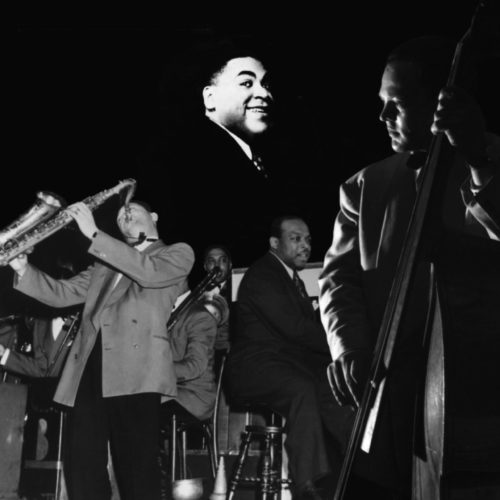
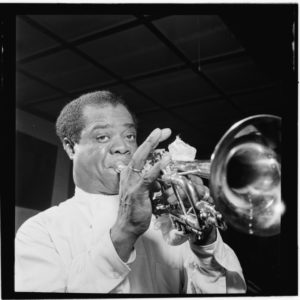
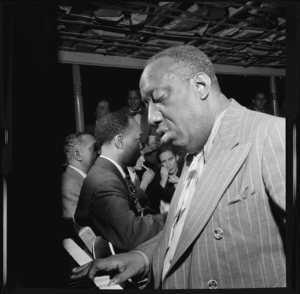
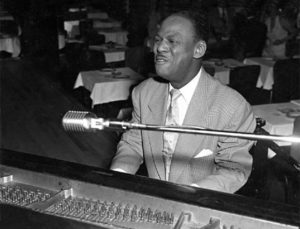
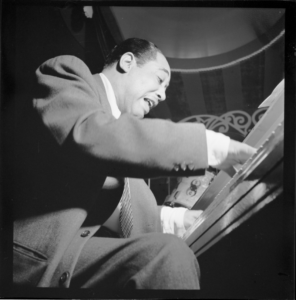
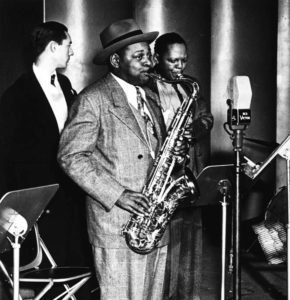
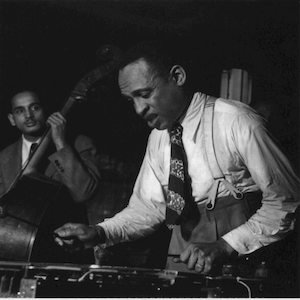
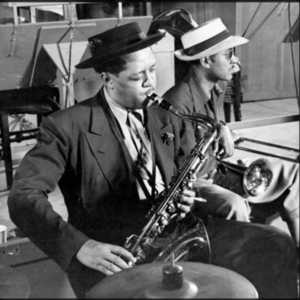
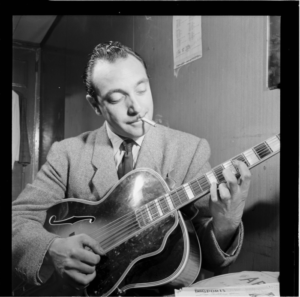
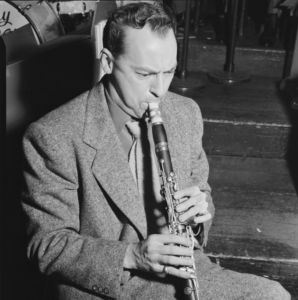
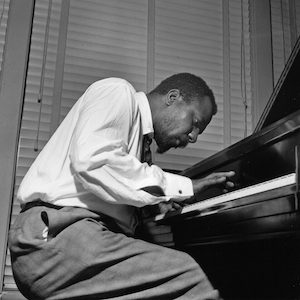
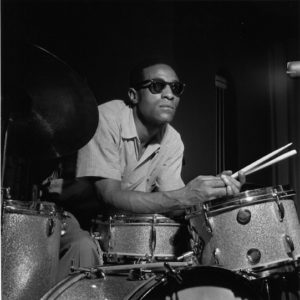
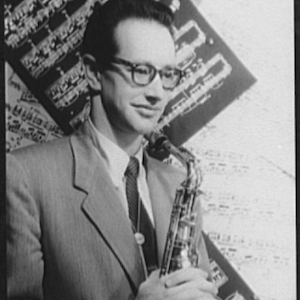
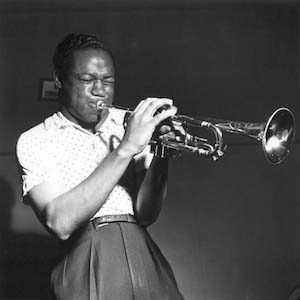
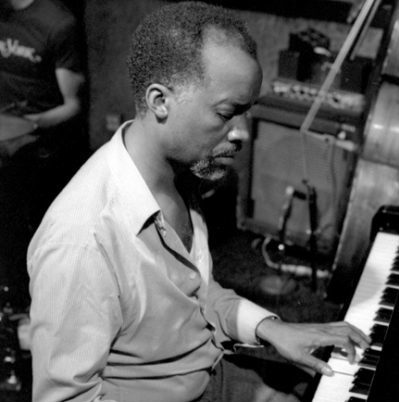
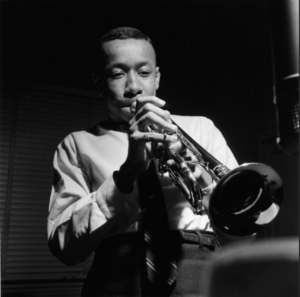
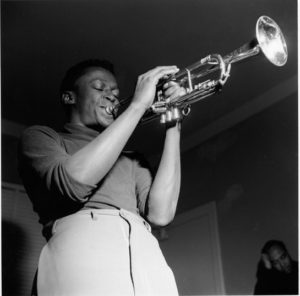
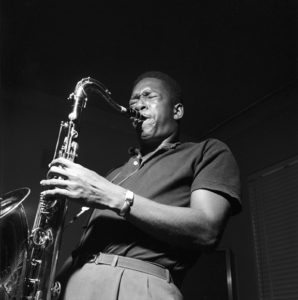
The photographs in our HRS set are truly a window into the world of this rare and highly regarded jazz independent label of the late 30s thru the late 40s. Frank Driggs provided us with a couple of wonderful shots including one inside the HRS record shop with owner Steve Smith and another with Rex Stewart signing musician union contracts at one of the HRS sessions. But the highlights are actual recording session photos by the great photographer Charles Peterson which were loaned to us by his son Don. The photographs in our HRS set are truly a window into the world of this rare and highly regarded jazz independent label of the late 30s thru the late 40s. Frank Driggs provided us with a couple of wonderful shots including one inside the HRS record shop with owner Steve Smith and another with Rex Stewart signing musician union contracts at one of the HRS sessions. But the highlights are actual recording session photos by the great photographer Charles Peterson which were loaned to us by his son Don.
SAMPLE RECORDING SESSION

The Bechet–Spanier Big Four-March 28 & April 6,1940

With this unique quartet, HRS made jazz history. Stephen Smith had been so taken with the drum-and-piano-less records made by Rex Stewart, Barney Bigard, Django Reinhardt and bassist Billy Taylor in Paris in 1939 that he issued them on HRS (as Improvisations In Ellingtonia), and he wanted to do something with the great Sidney Bechet (whom he'd worked with on the Jelly Roll Morton Bluebird dates) in a similar setting, but, as he told Bechet biographer John Chilton, "with an older, more traditional flavor." He asked Tommy Dorsey guitarist and arranger Carmen Mastren to sketch out "some intros, bridges and endings. Wellman Braud was in and out of the shop and was a sentimental favorite of mine. I picked out some tunes for a variety of tempos....[Muggsy Spanier's] lip was not in perfect shape but he would try to do his best."

Seventeen years later, Braud spoke of these sides as "the best four-piece recordings ever made, and in 1979, Mastren told Chilton that he'd had little contact with Bechet and Spanier before the dates, and none with Braud, and was apprehensive about what would happen in the studio. "Bechet and Braud arrived wearing big old coats and hats…they sat down opposite each other and exchanged pleasantries. It was like an ancient ritual between chieftains. Muggsy joined in [with the] same sort of approach. [Then] one, two, three, four — and wham! This music explodes all around me."

Bechet was, more often than not, fiercely competitive in the company of trumpet (or cornet) players. But here, he gets along famously with Spanier, perhaps because the cornetist's firm, unadorned lead and sincere, dedicated musicianship made him feel secure and comfortable. In any case, the two sessions yielded some of the most relaxed and flowingly inspired Bechet on record, and his interplay with Spanier is often sublime. This writer has known these records for some 50 years, and they can still give him gooseflesh. China Boy is in the pantheon of jazz masterpieces (with the alternate not far behind), and the others are merely marvelous. Throughout, Sidney employs both horns, often picking up the clarinet for background passages behind the chorded guitar and bowed or picked bass solo spots. When he solos on the clarinet, his embouchure is just right, while his soprano sound is more mellow than customary, though he gives it that bite when he wants it. The tempos are perfect throughout, never rushed or logy, and the subtle, springy support given by the two stringed instruments allow the horns to float their lines. Spanier's on-the-beat phrasing gives Bechet lots of space to fashion garlands of sounds around him, and both hornmen phrase with enough velocity to make the absence of a drummer a non-issue. Like Bechet's doubling, Muggsy's alternation between open horn and his famous plunger lend textural variety to the quartet's music, as do the occasional harmonized horn passages.

One could cite a myriad noteworthy instances from these 10 performances — the breaks on Lazy River, Muggsy first, à la Oliver and Louis, and then Sidney's spectacular one, linked perfectly with the ensuing solo; the fantastic soprano playing on China Boy, a number that comes out of the gate like a shot and never lets up, Sid's tonguing something to behold; Sid's sweeping phrases and Muggsy's romantic vein on If I Could Be With You, and Sid's fine second part; the clarinet ensemble work in That's A Plenty, doing all the customary trombone fills in grand style, and Muggsy's plunger solo that really rides (with great bass support); Mastren's pretty chords on Squeeze Me, where Sid takes an utterly surefooted break and Muggsy gets as emotional as he ever did, and the breaks, front and back, by both horns on the relaxed Sweet Sue — but the listener should find such felicities on his or her own. If you're hearing this music for the first time, keep those ears open wide — this is the real stuff!


CUSTOMER REVIEWS
Click here to write a review

  Not Complete
Bix Beiderbecke & the Wolverines were on the HRS (78rpm HRS25 for example). That isn't here; therefore, this should not be called complete. I suppose that doesn't matter now since this'll be gone soon.
 
  Still here?!?
I purchased this set almost 8 years ago. It has consistently been a worthy listen. No where else can you find some of the lesser known artists of the era coupled with the high caliber of the well known artists'sessions . I am (as the previous writer stated) very surprised that this set is still available. If you like swing that is not really influenced by bebop check it out. There are enough artists here to intrigue an enthusiast of the period. As a musician, Harry Carney's "Shadowy Sands" has long been a part of my "book". This is not 7 c.d's of Tal Farlow etc.-there are many many worthy tracks here and worthy musicians represented. The $ for this set will not be missed-unless you are evicted as a consequence...
 
  This set is still out there?
I got this set several years ago and it has not disappointed. What I find strange is that it is still available. There are many different artists in this set and most of them are not exactly in the forefront of the lionized "masters of the past". They are all worth hearing from both an aesthetic and historical vantage point. Most of this music is pre-Parker in conception and although the sound quality is variable it certainly is never as bad as some of the cleaned up air checks of Duke or Parker that are out there.There are sessions on this set that are absolutely a cut above 95% of the recordings out there and there are some that are merely good. However, the merely good provide an interesting slice of worthy players who are ignored in lieu of the Teddy Wilsons and Chu Berries.This really is a worthwhile set considering some of the classic caliber sessions (Bechet/Braff) as well as the spotlight on some of the lesser known but never-the-less worthy players of the era.
 
  Great set!
This set is a good mix of early swing. Dan Morgenstern is one of my favorite jazz scholars and his essay is an added bonus.
 
  UNA OBRA MAESTRA E INDISPENSABLE
Tras varias "escuchas" del set, cada vez estoy más sorprendido. Tengo, entre mis manos, una de las colecciones más bellas jamás hechas en la historia de la recopilación , restauración de la música en general, y del jazz en particular. Desde las increíbles y muy apreciadas grabaciones que aparecen de Bechet-Spanier, Teagarden, Stewart o Russell, aparecen otras que no desmerecen a las anteriores. Buck Clayton, Sandy Williams (con Hodges y Carney por ejemplo), Trummy Young, Procope,Billy Taylor (el pianista y el contrabajista),Fleagle etc. nos desgranan y ofrecen unas sesiones que piden ser oidas una y otra vez.La belleza de muchas de las piezas en su ejecución es increíble. Al final, las H.R.S. adquieren unidad conceptual. Como digo, para un amante del jazz, es una obra maestra, indispensable, y aún teniendo un valor económico, su valor intrínseco es tal, que el valor real es incalculable.
 
  What It Was!
As someone a little too young to have been there in the midst of it, this set really turns the era into Living Color. HRS was a recording company where the musicians ran the show, and the musicians it recorded were the tops. As a result, all of these recordings are good (even the occasional off-day preserved here is worth hearing), a goodly number of them are great, and there are a few that can send chills down your spine. I qualify this opinion by admitting that even though I've had this box for quite a while, there's still a lot in it that I haven't "got down," because whenever I put one of these discs on, I get hung up listening to a single session or two over and over -- there's that much to hear! If you think you even MIGHT be interested in this set, my advice is, don't hesitate: get it before it's gone. You won't see its like again.
 
  Commodore
I have yet to get this set, but I am very tempted. Meanwhile, I echo the comment (elsewhere in this group) about longing for Mosaic to reissue the Commodore sets on CD. Too bad Mosaic no longer mails catalogues. To have these on the sofa for browsing can make one buy something more readily than looking up a website.
 
  Fills in certain gaps in the jazz of its time
This anthology highlights specific individuals who were largely ignored by the commercial companies from the late 1930's to the mid-1940's. In addition, it contains the justifiably famous Bechet-Spanier session. However by including all of the HRS sessions, some of the collection is only good rather than outstanding. In addition, certain individual selections have mushy sound. Mosaic is not to blame as some of the masters have deteriorated or have been lost. I also suspect that the engineering on some of the original sessions was not top rate. Having said all this, it is still a very good album with the usual attention to detail and documentation. Some of the last sessions have hints of the Bop revolution then in high gear. Also, one has to admire the people who kept the HRS alive so that jazz fans could hear this music. Where are such people today? With both Concord and Fantasy now part of large corporations, Mosaic/Blue Note is one of the few organizations who preserve the great recordings from early to modern jazz.
 
  Anthology
Very interesting set. Lots of bands, lots of musicians.I now have had an introduction to many who I've previously only known by name. This is an anthology with shortish selections from a whole array of bands. At times I wished there were more tracks from particular bands and musicians etc. But good quality sound, good quality music with some great selections.
 
  Superb!!
The first two discs are perhaps the best small group jazz around. I am particularly fond of the Jack Teagarden-Ben Webster session. Too bad there are only 4 tracks. How I envy those who have the complete Commodore sessions!! I wish to the gods of music that Mosaic would re-release those sessions on CDs.
 
  Ne Plus Ultra
Sidney Bechet with "Muggsy" Spanier, Carmen Mastren and Wellman Braud together make the purchase of this set invaluable. Some of the greatest chamber music I've ever heard.
 
  Jazz Manna
Ok so I just got this and have only listened to the first disk, but I can safely say that I will never hear finer jazz in my life than the Sidney Bechet sessions. I dont know wether to cry or call my mother. You really just have to listen to understand.
 
  One of the best "variety packs" out there!
This set is truly a must have for anyone interested in the music before the big Parker/Gillespie induced changes. The Sidney Bechet segment is outstanding as well as the Pee Wee Russell session.The Brick Fleagle Orchestra disc is also worth checking out. Although Brick is heavily indebted to Duke (what big band arranger isn't?), the charts are of high quality with excellent soloists. Harry Carney's sessions are also wonderful-in fact I can't think of any part of this set that stands out as being poor. A couple of the tracks are not great, but with a set of this type it is significant that there are so very few drab moments. The HRS sessions really provide a snapshot of the music during this era with plenty of variety in artists and groupings. Another point is that with the variety of artists and the lack of huge numbers of tracks for each artist featured, there is little chance of getting bored. This set, given the rarities contained within it, is a must have. Miss it and be sorry.
 
  Excellent!
What a treasure trove. There's a wide variety of artists presented here, many of whom I had previously heard. Most, however, are new to me - and what an ear opening experience this has been. The majority of the set is small group swing with almost a CD of the Brick Fleagle Orchestra and of course some traditional jazz as well. This set is another fine example of what Mosaic does best - present great jazz of a variety of styles in an appealing package. Highly recommended if you're a fan of the styles contained within. If you're not and are interested in checking out some traditional jazz and swing - an excellent place to start. You can buy this set with confidence - Mosaic has done another fabulous job.
 
  Unmissable
A truly classic collection that stands among my most played Mosaic sets. Don't miss it.
 
  Fantastic!!!!!!!
This is a wonderful compilation. Mosaic deserves thanks for the care and effort put into the collection. A must buy for anyone who loves jazz.
 
  My Two Cents' Worth
Aside from the quality, variety, and listenability of the music in this set, this may well be one of the most important releases that Mosaic has yet put out. It compares to The Complete Commodore Recordings of some years back. I seriously doubt that, once this is gone, anything like it will be available again. (BL, Tucker, GA)
 
  WHAT A TREASURE!
There once was a time when record producers felt it was of vital importance to get jazz musicians recorded so their work would remain for posterity. Jazz collectors are indebted to such people as John Hammond, Leonard Feather, George Avakian. Norman Granz, Harry Lim and others for ensuring that we can still hear so many good musicians who are no longer with us. For these producers, the music was more important than sales volume and the bottom line, although they always hoped they could make some money. Today, the bottom line is everything and music has become as disposable as a paper towel. To the distinguished list of record producers, we must surely add Steve Smith and his HRS label. As a teenage jazz collector in the late '40s, I can tell you that it was never easy to find HRS recordings, but they were always worth the search. And since almost all records at the time were 78 rpm singles, one seldom knew if there were any more sides in the series, and if so, how many. This is why Mosaic's release o


The Complete H.R.S. Sessions (#187)
Limited Edition: 7500 copies
6 CDs - $96.00