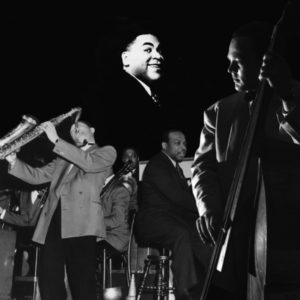
Lionel Hampton
"Motored by a seemingly limitless supply of energy and stamina, Hampton's playing is known the world over for its relentless physicality, unhampered technical facility, and a seemingly imperturbable inventiveness." - Gunther Schuller, The Swing Era
Lionel Hampton
Lionel Hampton was jazz’s first major vibraphonist, making a very strong impact when he joined Benny Goodman’s quartet in 1936. An enthusiastic and inventive soloist over 55 years, he was also one of jazz’s great showmen. Not only did he play stirring vibraphone solos but he was an excellent drummer (who twirled his sticks to gain the audience’s attention), played rapid two-finger piano solos (one on each hand), took an occasional vocal, and could also do an impressive soft-shoe.
Lionel Hampton led rollicking big bands that invariably featured honking saxophonists, roaring trombonists, and screaming trumpeters, thrilling audiences with “Hey Ba-Ba-Re-Bop,” “Hamp’s Boogie Woogie” and, most of all “Flying Home.” He led the way towards r&b and rock while swinging hard, and always performed music full of joy and excitement.
I’m In The Mood For Swing
July 21, 1938
Harry James (tp), Benny Carter (cl, as, arr), Dave Matthews (as), Babe Russin, Herschel Evans (ts), Lionel Hampton (vib, vcl), Billy Kyle (p), John Kirby (b), Jo Jones (d)
Track analysis by Loren Schoenberg
Lionel Hampton hits pay dirt for the first time with arrangements and players that are of equal quality. Benny Carter, 30 years old and just back after three years in Europe, announced his return to his native country with brilliant writing and playing, aided by a band full of mostly newcomers to New York who responded in inspired fashion to Carter’s scores.
It’s worth noting that the great bulk of jazz musicians on these sessions were under 30, and that their work, for all its maturity, still has the sheen of youth to it. Texas is represented by 22 year-old Benny Goodman trumpeter Harry James (his family moved there from Georgia when he was in his mid-teens), and 28 year old Herschel Evans, featured tenor saxophonist (along with Lester Young) with Count Basie. It was Basie’s rhythm section which astounded New York, and its drummer was Jo Jones (26), known for his emphasis on playing the flow of the rhythm rather than its strict demarcation.
I’m In The Mood For Swing is not only a highlight in the Lionel Hampton and Benny Carter discographies, but a jazz classic for all time. Everything comes together and a synergy takes place where the sum is truly greater than even these distinguished parts.
Carter had a way of composing that created a perfect balance between written and improvised segments, and his mastery of orchestration placed everything in the optimal register for all the instruments at hand. Here, it’s a relatively intimate ensemble of trumpet, four saxophones, vibes and a three piece rhythm section (minus the standard for the time guitar).
Harry James was one of the most technically gifted trumpeters of his generation and a member of Goodman’s band, where he had become one of its most popular soloists. Harry James was already his own man as he takes the lead during the first chorus, working his way naturally into a series of paraphrases and then free inventions that never lose site of the theme.
What follows is truly magical – Carter creating a solo that for all its spontaneity has the hallmarks of a classic composition. His use of symmetry can be heard in all its glory. Every phrase leads to the next, rhyming without falling into the trap of predictability. He also knows how to utilize space – the pause at the end of the bridge is a master stroke, filled as it is by Kyle’s descending left hand scale.
By Scott Yanow
Lionel Hampton was born April 20, 1908 in Louisville, Kentucky, growing up in Birmingham, Alabama, Kenosha, Wisconsin, and Chicago. Hampton started out as a drummer, playing with Major N. Clark Smith’s Chicago Defender Newsboys’ Band and some local kids’ groups in Chicago. He had a few xylophone lessons from Jimmy Bertrand, moved to Los Angeles in 1927, and worked briefly with the Spike Brothers. During 1929-30 he was a member of one of the hottest bands in the state, Paul Howard’s Quality Serenaders, with whom he made his recording debut as a drummer, taking a vocal on “Moonlight Blues.”
Lionel Hampton became a member of Les Hite’s orchestra in 1930, a group that was used as Louis Armstrong’s backup band when he visited L.A. that year. Spotting a vibraphone in the studio, Armstrong asked Lionel Hampton if he could play it and, remembering his xylophone lessons, the drummer said yes. Lionel Hampton can be heard playing vibes behind Armstrong on “Memories Of You” and “Shine,” the earliest examples of the vibes being used on a jazz record for anything other than brief punctuations.
After Louis Armstrong went back East, Lionel Hampton remained with the Les Hite band until forming his own orchestra in 1934. In 1936 he crossed paths with Armstrong again, appearing on film as a masked drummer with Satch in the Bing Crosby film Pennies From Heaven and recording with Armstrong on two numbers with a Hawaiian group.
Most importantly, Benny Goodman heard Lionel Hampton play vibes and was so impressed that he expanded his trio with pianist Teddy Wilson and drummer Gene Krupa into the Benny Goodman Quartet. Lionel Hampton made a few guest appearances with the King of Swing and then officially joined his outfit in Nov. 1936.
During his nearly four years with Goodman, Lionel Hampton became a household name in the swing world, not only adding fire, color and inventive ideas to Goodman’s quartet and occasionally filling in on drums with the big band, but staying long enough to be one of the stars at Goodman’s famed Carnegie Hall concert in 1938, and to be part of the clarinetist’s sextet with the pioneering electric guitarist Charlie Christian. At the same time, Lionel Hampton led a series of mostly superb all-star sessions for the Victor label.
During that period, Lionel Hampton had no real competitors on the vibraphone. Adrian Rollini, who had gained prominence in the 1920s as a bass saxophonist, was gradually switching to the vibes although his style was more easy-listening. Red Norvo was a xylophonist who would not seriously take up the vibes until 1943 while such greats as Milt Jackson and Terry Gibbs would not emerge for a few more years.
In mid-1941, the 33-year old Lionel Hampton was more than ready to go out on his own. He always loved the sound of Goodman’s big band and decided to form an orchestra of his own. The big band field was way overcrowded at the time and the odds were against his success, but Lionel Hampton had a big name and was always a crowd pleaser.
On May 26, 1942 he recorded “Flying Home” which became not only a major hit but was a major influence on the up-and-coming rhythm & blues movement. Illinois Jacquet’s tenor solo, the leader’s vibes, the famous arrangement (with Ernie Royal’s high notes), and the ensembles made the song into an immediate standard and a must at every Lionel Hampton performance. From then on, Lionel Hampton’s big band was extremely popular. Its live performances were so explosive meant no other jazz artist could follow it.
During the 1940s the Hampton Orchestra, while based in swing, was open to the influences of both bop and r&b. At various times the vibraphonist’s sidemen included such notables as trumpeters Cat Anderson, Snooky Young, Kenny Dorham, Fats Navarro and Benny Bailey, trombonist Fred Beckett, tenor-saxophonists Jacquet, Arnett Cobb and Johnny Griffin, altoist Earl Bostic, guitarist Wes Montgomery (a decade before his discovery), pianist Milt Buckner, bassist Charles Mingus, and singers Dinah Washington, Little Jimmy Scott, and Betty Carter.
Most of the swing era big bands broke up during 1945-50 but Lionel Hampton was able to keep his going, while taking time off to participate in special all-star sessions. In 1953 he led what was possibly his greatest orchestra for a European tour, one that included trumpeters Clifford Brown, Art Farmer and Quincy Jones (who was just starting out as an arranger), trombonists Jimmy Cleveland and Buster Cooper, altoist Gigi Gryce, tenor-saxophonist Clifford Scott, pianist George Wallington, drummer Alan Dawson, and singer Annie Ross.
But for unknown reasons, LionelHampton insisted that his musicians not record while overseas. Most of his sidemen ignored him and even the vibraphonist was on some sessions of his own. Other than some radio broadcasts that find the band in loose form and not being featured very favorably, no recordings exist of the full orchestra which broke up soon after they returned to the U.S.
From that point on, Lionel Hampton’s musical career alternated between three different settings. He continued to regularly lead a big band and, although it never really evolved, many top young (and inexpensive) players gained experience touring and playing with the vibraphonist. Lionel Hampton was enlisted for many small-group record sessions which gave him opportunities to record in a trio with Art Tatum and Buddy Rich, to co-lead a memorable album with Stan Getz, and to have several dates with Oscar Peterson. And Lionel Hampton was always happy to have reunions with his old boss Benny Goodman including appearing in the 1955 film The Benny Goodman Story, making television appearances, and revisiting past glories with Goodman, Krupa and Wilson in the reunited quartet.
The decades passed but Lionel Hampton’s enthusiasm for playing never dimmed. In the early 1990s he led the Golden Men Of Jazz, an octet of fellow veterans that included Clark Terry, Harry “Sweets” Edison, James Moody, and Buddy Tate. A serious stroke in 1991 led to him cutting back on his activities but Lionel Hampton stayed active until shortly before his death. In his later years, he would look his age when he was being helped onstage but, as soon as he was in front of his vibes, the years would melt away and he would be remarkably youthful and energetic.
The always beloved Lionel Hampton passed away on Aug. 31, 2002 at the age of 94.
Sweethearts On Parade
April 5th, 1939
Chu Berry (ts), Lionel Hampton (vib, vcl), Clyde Hart (p), Allan Reuss (g), Milt Hinton (b), Cozy Cole (d)
This is perfection.
Track analysis by Loren Schoenberg
Here we have the birth, if the not the apex, in the long legacy of Lionel Hampton records with stomping tenor sax solos. Sweethearts On Parade finds Chu Berry creating a new sound in the tenor saxophone lexicon. This style leavened with an equal dose of Lester Young, would give birth a decade later to the honkin’ R&B sounds that led to early rock and roll. While Illinois Jacquet stoked that fire, it was set by Berry and Young.
Equally striking is the sheer perfection of the rhythm section. They carry off one of the most perfect shuffle beats ever recorded. Most times, shuffles get sloppy and heavy because of a lack of definition in the subtle strong and weak parts of the defining beat.
The precision heard here allows Hart, Reuss, Hinton and Cole to dig deeply into the groove and Berry is with them every swinging quarter note of the way. Clearly, they had the idea that Berry would play throughout the record, but I wonder if Lionel Hampton had even an inkling that the tenor saxophonist would steamroll his way into the pantheon of jazz on this particular effort.
Benny Carter’s sequential phrasing and mastery of the saxophone were major influences on the young Berry, and the way he patiently links his phrases is nothing short of miraculous. Then there is also the way he masterfully gradates a vibrato that is at moments as broad as Sidney Bechet’s. In lesser hands (or lips) the high note Berry holds from the fifth measure of his solo into the sixth would be bathetic; in his, it is thrilling. Note his habit of preceding a minor chord with the 13th of the dominant chord which makes for a modal ambiguity that is quite unusual for the era.
And let’s not forget Cole’s tantalizing restraint, making his occasionally subtle emphases and slight extension of the hi-hat beat (measures seven and eight of Hampton’s closing chorus) all the more exciting. He was likely aware that Lionel Hampton had played drums on Armstrong’s 1930 recording, which was one of the trumpeter’s best ever.
Extraordinary Jazz Artists
Extraordinary Jazz Music

Mosaic Records Limited Edition Box Sets
-
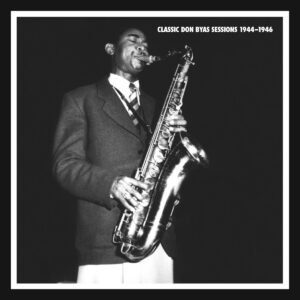
 Classic Don Byas Sessions 1944-1946 (#277 - 10 CDs)
$179.00
Classic Don Byas Sessions 1944-1946 (#277 - 10 CDs)
$179.00
-
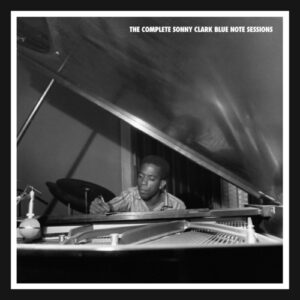
The Complete Sonny Clark Blue Note Sessions Limited Edition Box Set (#276 - 6 CDs)
$99.00
-
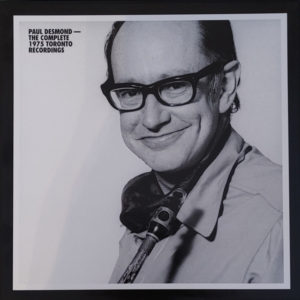
Paul Desmond – The Complete 1975 Toronto Recordings (#269 - 7 CDs)
$119.00
-
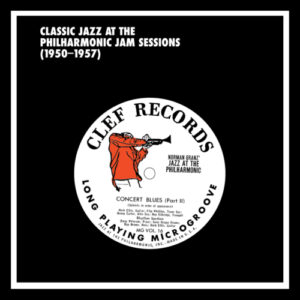
Classic Jazz At The Philharmonic Jam Sessions 1950-1957 (#275 - 10 CDs)
$169.00
-
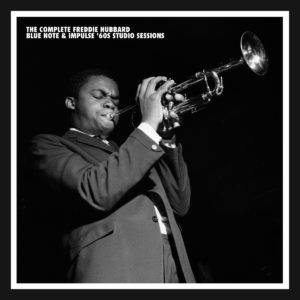
The Complete Freddie Hubbard Blue Note & Impulse Studio Sessions Limited Edition Box Set (#274 - 7 CDs)
$119.00
-
Classic Black & White Jazz Sessions Limited Edition Box Set (#273 - 11 CDs)
$179.00
-
Lennie Tristano Personal Recordings 1946 - 1970 (#272 - 6 CDs)
$99.00
-
The Complete Joe Henderson Blue Note Studio Sessions (#271 - 5 CDs)
$85.00
-
The Savory Collection 1935-1940 (#266 - 6 CDs)
$99.00
Lionel Hampton
Selected Jazz Albums
By Scott Yanow
The Complete Lionel Hampton Victor Sessions (1937-41)
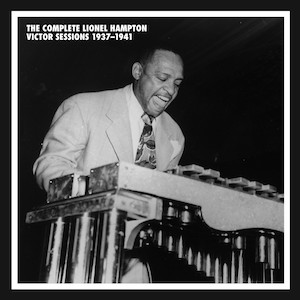
While a member of the Benny Goodman Quartet, Lionel Hampton started leading a series of all-star swing dates for the Victor label. During 1937-41 he recorded 107 selections with 23 different groups that, like the Teddy Wilson dates of the same period, give listeners a strong cross section of the many talents of the time. All of the music was reissued on Mosaic’s five-CD limited-edition box set.
Among the highpoints are such numbers as “Stomp” (with Hampton on drums), “Stompology,” “On The Sunny Side Of The Street” (which has some beautiful Johnny Hodges alto), “Ring Dem Bells,” “Shoe Shiner’s Drag,” “Sweethearts On Parade” (Chu Berry at his best), “When Lights Are Low,” “Dinah” (with Benny Carter on trumpet and Coleman Hawkins), and “House Of Morgan” (with the Nat King Cole Trio) but every session has its rewards. Consider that the personnel includes trumpeters Ziggy Elman, Cootie Williams, Jonah Jones, Harry James, Rex Stewart, Dizzy Gillespie in 1939 (unfortunately he does not get a chance to solo), and Henry “Red” Allen, trombonists Lawrence Brown and J.C. Higginbotham, clarinetists Buster Bailey and Edmond Hall, altoists Johnny Hodges and Earl Bostic, tenor-saxophonists Herschel Evans, Chu Berry, Coleman Hawkins, and Ben Webster, baritonist Harry Carney, pianists Jess Stacy, Billy Kyle, Clyde Hart, Nat King Cole and Sir Charles Thompson, guitarists Charlie Christian, Oscar Moore and Teddy Bunn, bassists John Kirby and Milt Hinton, and drummers Gene Krupa, Cozy Cole, Sonny Greer, Jo Jones, Sid Catlett, and Zutty Singleton, not to mention Hampton himself. It is not surprising that a great deal of musical magic occurred.
All sessions as “Lionel Hampton and Orchestra” or “Lionel Hampton and his Orchestra” unless noted. To the best of our knowledge, the discography is in the order in which the tunes were recorded. However, the CDs contained in this box set are presented with the master take first and then any alternates at the conclusion of the disc. ________________________________________________________________________
(A) Ziggy Elman (tp), Hymie Schertzer, George Koenig (as), Vido Musso, Arthur Rollini (ts), Lionel Hampton (vib, vcl), Jess Stacy (p), Allen Reuss (g), Harry Goodman (b), Gene Krupa (d).
Supervised by Leonard Joy
NYC, February 8, 1937
04582-2 My Last Affair (LH-vcl) RCA (F) NL 89583 (LP)
04582-1 My Last Affair (LH-vcl) Vic 25527
04583-1 Jivin’ The Vibres Vic 25535
04584-1The Mood That I’m In (LH-vcl)Vic 25527
04585-1 Stomp –1 Vic 25535
–1 Hampton (d) replaces Krupa.
Note: The master and alternate of matrix 04582 are reversed on the RCA LP and CD 66500, The Complete Lionel Hampton Vol. 1/2 (1937-1938).
________________________________________________________________________
(B) Cootie Williams (tp), Lawrence Brown (tb), Johnny Hodges (as), Lionel Hampton (vib, vcl), Jess Stacy (p), Allen Reuss (g), John Kirby (b), Cozy Cole (d).
Supervised by Eli Oberstein & Leonard Joy
NYC, April 14, 1937
07792-3R Buzzin’ ‘Round With The Bee (LH-sp) Vic 25575
07793-3R Whoa Babe (LH-vcl) –
07794-1 Stompology Vic 25601
Note: The flip side of Victor 25601 is by the Quintette of the Hot Club of France.
Mezz Mezzrow’s name was listed on the label and in discographies, but he is not audible.
________________________________________________________________________
(C) Buster Bailey (cl), Johnny Hodges (sop, as), Lionel Hampton (vib, vcl), Jess Stacy (p), Allen Reuss (g), John Kirby (b), Cozy Cole (d).
Supervised by Leonard Joy
NYC, April 26, 1937
07864-1 On The Sunny Side Of The Street (LH-vcl) Vic 25592
07865-1 Rhythm, Rhythm (I Got Rhythm) Vic 25586
07866-1 China Stomp (Chinatown, My Chinatown) –1 –
07867-1A I Know That You Know –2 Vic 25592
–1 Hampton and Stacy (p); omit Hodges.
–2 Hampton (d) replaces Cole.
________________________________________________________________________
(D) Jonah Jones (tp), Eddie Barefield (cl), Lionel Hampton (vib, vcl), Clyde Hart (p), Bobby Bennett (g), Mack Walker (b), Cozy Cole (d).
NYC, August 16, 1937
09644-1 Confessin’ (That I Love You) (LH-vcl) Vic 25658
09645-1 Drum Stomp (Crazy Rhythm) –1 –
09646-1 Piano Stomp (Shine) –2 Vic 25666
09647-1 I Surrender Dear –
–1 Hampton (d) replaces Cole.
–2 Add Hampton (p).
________________________________________________________________________
(E) Ziggy Elman (tp), Vido Musso (cl, ts), Arthur Rollini (ts), Lionel Hampton (vib, vcl), Jess Stacy (p), Allen Reuss (g), Johnny Miller (b), Cozy Cole (d).
NYC, September 5, 1937
09680-1 The Object Of My Affections (LH-vcl) RCA (F) 741077 (LP)
09680-2 The Object Of My Affections (LH-vcl) Vic 25699
09681-2 Judy (LH-vcl) –
09682-2 Baby, Won’t You
Please Come Home (LH-vcl) Vic 25674
09683-2 Everybody Loves My Baby (LH-vcl) Vic 25682
09684-1 After You’ve Gone (LH-vcl) Vic 25674
09685-1 I Just Couldn’t Take It, Baby (LH-vcl) Vic 25682
________________________________________________________________________
(F) Cootie Williams (tp), Johnny Hodges (as), Edgar Sampson (bari, arr), Lionel Hampton (vib, vcl), Jess Stacy (p), Allen Reuss (g), Billy Taylor (b), Sonny Greer (d).
Supervised by Leonard Joy
NYC, January 18, 1938
018335-1 You’re My Ideal (LH-vcl) Vic 25771
018336-1 The Sun Will Shine Tonight (LH-vcl) previously unissued
018336-2 The Sun Will Shine Tonight (LH-vcl) Vic 25771
018337-1 Ring Dem Bells (LH-vcl) Vic 25889, 26017
018338-1 Don’t Be That Way (ES-arr) Vic 26173
Note: Although some discographies list Victor 25889 as never being issued, matrix 018337 did appear and was backed with Pick The Winner a horse racing game! The more common release, Victor 26017, was issued shortly thereafter and is listed here as well.
As is noted in the liner notes to this set, Edgar Sampson is more than likely the arranger on all of the titles from this session.
________________________________________________________________________
(G) Harry James (tp), Benny Carter (cl, as, arr), Dave Matthews (as), Babe Russin, Herschel Evans (ts), Lionel Hampton (vib, vcl), Billy Kyle (p), John Kirby (b), Jo Jones (d).
NYC, July 21, 1938
024065-1 I’m In The Mood For Swing (BC-arr) Vic 26011
024066-1 Shoe Shiner’s Drag –
024067-1 Any Time At All (LH-vcl) (BC-arr) Vic 26039
024068-1 Muskrat Ramble Vic 26017
Note: The flip side of Victor 26039 is by Nick LaRocca and the Original Dixieland Band.
________________________________________________________________________
(H) Walter Fuller (tp), Omer Simeon (cl, as), George Oldham (as), Budd Johnson (cl, ts, prob. arr. on all titles), Robert Crowder (ts), Lionel Hampton (vib, vcl), Spencer Odom (p), Jesse Simpkins (b), Alvin Burroughs (d).
NYC, October 11, 1938
025866-1 Down Home Jump Vic 26114
025867-1 Rock Hill Special –1 –
025868-1 Fiddle Diddle (LH-vcl) Vic 26173
–1 Add Hampton (p and vib).
________________________________________________________________________
(I) Irving Randolph (tp), Hymie Schertzer, Russell Procope (cl, as), Jerry Jerome (cl, b-cl, ts), Chu Berry (cl, ts), Lionel Hampton (vib, vcl), Clyde Hart (p), Allan Reuss (g), Milt Hinton (b), Cozy Cole (d), Fred Norman (arr).
Supervised by Leonard Joy
NYC, April 3, 1939
035392-1 I Can Give You Love (LH-vcl) Vic 26343
035393-1 High Society (FN-arr) Vic 26209
035394-2 It Don’t Mean A Thing (If It
Ain’t Got That Swing) (LH-vcl) previously unissued
035394-1 It Don’t Mean A Thing (If It
Ain’t Got That Swing) (LH-vcl) Vic 26254
035395-1 Johnny Get Your Horn (LH-vcl) Vic 26343
Note: Discographies list Hymie Schertzer as the bass clarinetist on High Society. However, Jerry Jerome confirmed he was the soloist.
The ledgers reveal that a rehearsal was called after this session from 1:30-2:30pm and included those who would participate in the April 5th session. No recordings were made.
________________________________________________________________________
(J) Chu Berry (ts), Lionel Hampton (vib, vcl), Clyde Hart (p), Allan Reuss (g), Milt Hinton (b), Cozy Cole (d).
NYC, April 5, 1939
035703-1 Sweethearts On Parade (LH-vcl) Vic 26209
035704-1 Shufflin’ At The Hollywood RCA (G) LPM 10024 (LP)
035704-2 Shufflin’ At The Hollywood Vic 26254
035705-1 Denison Swing –1 Vic 26233
035706-1 Wizzin’ The Wizz –2 Mosaic MD7-236 (CD)
035706-2 Wizzin’ The Wizz –2 Vic 26233
–1 Hampton (p) replaces Hart.
–2 Hampton and Hart (p).
________________________________________________________________________
(K) Ziggy Elman (tp), Hymie Schertzer (cl, as), Russell Procope (cl, sop, as), Jerry Jerome, Chu Berry (cl, ts), Lionel Hampton (vib, d, timpany, vcl, arr), Clyde Hart (p), Danny Barker (g), Milt Hinton (b), Cozy Cole (d), Fred Norman (arr).
Supervised by Steve Sholes
NYC, June 9, 1939
037614-1 If It’s Good (LH-vcl) (LH, FN-arr) Vic LPM 6702-5 (LP)
037615-1 Stand By! For Further Announcements (And
More Good News) (LH-vcl) (LH, FN-arr) Vic 26296
037616-1 Ain’t Cha Comin’ Home ? Vic 26362
037617-2 Big Wig In The Wigwam (ens.vcl) (LH, FN-arr) previously unissued 037617-1 Big Wig In The Wigwam (ens.vcl) (LH, FN-arr) Vic 26296
________________________________________________________________________
(L) Rex Stewart (cor), Lawrence Brown (tb), Harry Carney (bari), Lionel Hampton (vib, vcl), Clyde Hart (p), Billy Taylor (b), Sonny Greer (d), Fred Norman (arr).
NYC, June 13, 1939
037630-1 Memories Of You (FN-arr) Vic 26304
037631-1 The Jumpin’ Jive (LH-vcl) (FN-arr) –
037632-2 Twelfth Street Rag –1 previously unissued
037632-1 Twelfth Street Rag –1 Vic 26362
–1 Add Hampton (p).
________________________________________________________________________
(M) Dizzy Gillespie (tp), Benny Carter (as, arr), Coleman Hawkins, Chu Berry, Ben Webster (ts), Lionel Hampton (vib), Clyde Hart (p), Charlie Christian (g), Milt Hinton (b), Cozy Cole (d).
Supervised by Leonard Joy
NYC, September 11, 1939
041406-2 When Lights Are Low RCA (F) PM 42406 (LP)
041406-1 When Lights Are Low Vic 26371
041407-1One Sweet Letter From You (LH-vcl)Vic 26393
041408-1 Hot Mallets Vic 26371
041409-1 Early Session Hop Vic 26393
________________________________________________________________________
(N) Henry “Red” Allen (tp, vcl), J.C. Higginbotham (tb), Earl Bostic (as), Lionel Hampton (vib, vcl), Clyde Hart (p), Charlie Christian (g, el-g), Artie Bernstein (b), Sid Catlett (d).
NYC, October 12, 1939
042941-1 I’m On My Way From You (LH-vcl) Vic 26476
042942-1 Haven’t Named It Yet –
042943-1 The Heebie Jeebies Are Rockin’ The Town (LH, HA-vcl) Vic 26423
042943-2 The Heebie Jeebies Are Rockin’ The Town (LH, HA-vcl) –
Note: Matrix 042943-1 was not released until c. 1945. The title given in the ledgers and file cards is The Heebie Jeebies Rock.
________________________________________________________________________
(O) Ziggy Elman (tp), Toots Mondello (cl, as), Jerry Jerome (ts), Ben Webster (ts), Lionel Hampton (vib, vcl), Clyde Hart (p, arr), Al Casey (g), Artie Bernstein (b), Slick Jones (d).
Supervised by Leonard Joy
NYC, October 30, 1939
043246-1 The Munson Street Breakdown (CH-arr) –1 Vic 26453
043247-1 I’ve Found A New Baby (CH-arr) –2 Vic 26447
043248-1 I Can’t Get Started (CH-arr) Vic 26453
043249-1 Four Or Five Times (LH-vcl) (CH-arr) Vic 26447
043250-1 Gin For Christmas –3 Vic 26423
–1 Add Hampton (p and vib).
–2 Add Hampton (p).
–3 Hampton (d) replaces Jones.
Note: The ledgers and file cards indicate that Fletcher Henderson was the arranger on I’ve Found A New Baby.
________________________________________________________________________
(P) Benny Carter (tp), Edmond Hall (cl), Coleman Hawkins (ts), Lionel Hampton (vib), Joe Sullivan (p), Freddie Green (g), Artie Bernstein (b), Zutty Singleton (d).
Supervised by Leonard Joy
NYC, December 21, 1939
046024-2 Dinah RCA Victor LPV 501 (LP)
046024-1 DinahVic 26557
046025-1 My Buddy Vic 26608
046026-1 Singin’ The Blues Vic 26557
________________________________________________________________________
(Q) Ziggy Elman (tp), Toots Mondello, Buff Estes (as), Jerry Jerome, Budd Johnson (ts), Lionel Hampton (vib), Spencer Odom (p), Ernest Ashley (g), Artie Bernstein (b), Nick Fatool (d).
Chicago, February 26, 1940
044724-1 Shades Of Jade Vic 22604
044725-1 Till Tom Special –
044726-1 Flyin’ Home Vic 26595
044727-1 Save It, Pretty Mama –
044728-1 Tempo And Swing Vic 26608
________________________________________________________________________
(R) Lionel Hampton (vib), Nat “King” Cole (p), Oscar Moore (el-g), Wesley Prince (b), Al Spieldock (d), Helen Forrest (vcl).
Supervised by Harry Meyerson
Hollywood, May 10, 1940
049674-1 House Of Morgan Vic 26751
049675-1 I’d Be Lost Without You (HF-vcl) –
049676-1 Central Avenue Breakdown –2 Vic 26652
049677-1 Jack The Bellboy –1 –
–1 Hampton (d) replaces Spieldock.
–2 Hampton and Cole (p).
Note: What should be Jack The Bellboy on Bluebird CD 63966, (Ring Dem Bells), is actually House of Morgan.
________________________________________________________________________
(S) Lionel Hampton (vib, vcl), Nat “King” Cole (p, vcl), Oscar Moore (el-g, vcl), Wesley Prince (b), Al Spieldock (d), Hampton Rhythm Boys (Cole, Moore), Helen Forrest (vcl).
prob. supervised by Harry Meyerson
Hollywood, July 17, 1940
049932-2 Dough-Ra-Me (HRB-vcl) RCA (J) 90-95 (LP)
049932-1 Dough-Ra-Me (HRB-vcl) Vic 26696
049933-1 Jivin’ With Jarvis (LH, NKC, OM-vcl) Vic 26724
049934-1 Blue –
049935-1 I Don’t Stand A Ghost Of A Chance With You (HF-vcl) Vic 26696
________________________________________________________________________
(T) Lionel Hampton (vib), Marlowe Morris (p), Teddy Bunn (el-g), Douglas Daniels (tipple, vcl), Hayes Alvis (b), Kaiser Marshall (d).
NYC, August 21, 1940
055532-2 Just For Laffs previously unissued
055532-1 Just For Laffs Vic 26793
055533-1 Martin On Every Block previously unissued
055533-2 Martin On Every Block Vic 26739
055534-1 Pig Foot Sonata Vic 26793
055535-1 Charlie Was A Sailor (DD-vcl) Vic 26739
Note: Matrix 055533-1 is listed in discographies as being issued on Victor 26739. However, the file cards and ledgers list only -2 as being scheduled for release and copies of Victor 26739 we have examined contain only -2 as the master. One of the many reissues claiming they used -1 but actually used -2, is the LP box set The Complete Lionel Hampton / 1937-1941 (Bluebird AXM6-5536).
________________________________________________________________________
(U) LIONEL HAMPTON & HIS SEXTETTE: Lionel Hampton (vib), Sir Charles Thompson (p), Irving Ashby (g), Vernon Alley (b), Lee Young (d, vcl), Hampton Rhythm Girls (Evelyn Myers and 2 unknown) (vcl).
Supervised by Harry Meyerson
Hollywood, December 19,1940
055228-2 Lost Love (LY, HRG-vcl) Vic 27278
Marshal Royal (cl), Lionel Hampton (vib), Sir Charles Thompson (p), Irving Ashby (g), Vernon Alley (b), Lee Young (d), Evelyn Myers (vcl).
same session
055229-1 I Nearly Lost My Mind (EM-vcl) Vic 27316
Marshal Royal (cl), Lionel Hampton (vib), Sir Charles Thompson (p), Ray Perry (el-vln), Irving Ashby (el-g), Vernon Alley (b), Lee Young (d).
same session
055230-1 Altitude Vic 27316
055231-1 Fiddle-Dee-Dee Vic 27364
Note: Matrix 055228-1 is listed in discographies as being issued on Victor 27278, however, this take has eluded us and therefore we cannot confirm its existance. In addition, the metal part (and any test pressings) are no longer in the physical posession of BMG. The CD release on Classics 624 (Lionel Hampton 1941) and RCA (J) 90-95 (LP) both list Lost Love as using -1, however, -2 is the take that is used.
________________________________________________________________________
(V) LIONEL HAMPTON AND HIS SEXTETTE: Marshal Royal (cl, as), Lionel Hampton (vib, vcl), Sir Charles Thompson (p), Ray Perry (el-vln), Irving Ashby (el-g), Vernon Alley (b), Lee Young (d), Hampton Rhythm Girls (Evelyn Myers and 2 unknown) (vcl).
Supervised by Harry Meyerson
Hollywood, December 20, 1940
055234-1 Bogo-Jo (LH, HRG-vcl) Vic 27341
055235-1 Open House –
055236-1 Smart Aleck Vic 27278
055237-1 Bouncing At The Beacon –1 Vic 27364
–1 Hampton and Thompson (p).
________________________________________________________________________
(W) LIONEL HAMPTON AND HIS SEXTET: Karl George (tp), Marshal Royal (cl, vcl), Lionel Hampton (vib, vcl), Sir Charles Thompson (p), Ray Perry (el-vln, as), Irving Ashby (el-g), Vernon Alley (b), Shadow Wilson (d), Ruble Blakey (vcl).
Chicago, April 8, 1941
064055-2R Give Me Some Skin (LH, RB, MR-vcl) Vic 27409
064056-1 Now That You’re Mine (RB-vcl) Vic 27529
064057-2 Chasin’ With Chase –1 previously unissued
064057-1 Chasin’ With Chase –1 Vic 27529
064058-2 Three Quarter Boogie previously unissued
064058-1 Three Quarter Boogie Vic 27409
–1 Hampton (d) replaces Wilson.
Note: Metal parts of matrix 064055 exist with -1 and -3R, however, they are dubs of -2R.
________________________________________________________________________
The original recording supervisors for these sessions were Leonard Joy, Eli Oberstein, Steve Sholes and Harry Meyerson.
Produced for release by Scott Wenzel
Executive Producer: Michael Cuscuna
Disc transfers: Mark Wilder and Andreas Meyer
Mastered using 24-bit technology by Malcolm Addey
Vault research: Anthony Fountain, Michael Brooks, Scott Wenzel
Special thanks: Ed Berger, Michael Brooks, Lloyd Ferencik, Tad Hershorn, The Institute of Jazz Studies, Robin Manning, Dan Morgenstern, Michael Panico, Vincent Pelote, Lloyd Rauch, Phil Schaap, Sir Charles Thompson, Tom Tierney and Maria Triana.
Design Direction: Richard Mantel
Design Production: InkWell, Inc.
Should be P 2007 BMG Music. Manufactured by SONY BMG (this line and everything after was correct). It should not start as This compilation.
P 2007 BMG Music. Manufactured by SONY BMG MUSIC ENTERTAINMENT, 550 Madison Avenue, New York, NY 10022-3211/WARNING All Rights Reserved. Unauthorized duplication is a violation of applicable laws.
© 2007 Mosaic Records L.L.C., 35 Melrose Place, Stamford, CT 06902. All rights reserved.
Phone: 203-327-7111/Fax 203-323-3526/ Website: www.mosaicrecords.com.
Producer’s Note:
This set contains all of the sessions led by Lionel Hampton for the Victor label from 1937 to 1941. Although the sound quality of these sessions will differ from track to track, we have made every effort to obtain the best possible source copy which, in the case of this set, were the original metal parts and test pressings.
In addition to the original Victor file cards and ledgers, the following sources were used for this discography: The Jazz Discography by Tom Lord (Cadence Jazz Books), Jazz Survivor by Marshal Royal (Cassell Pub.), Jazz Records 1897-1942 Sixth Edition by Brian Rust (Storyville).
Scott Wenzel
Hamp (GRP/Decca)
Midnight Sun (GRP/Decca):
Hamp is a two-CD set that does a fine job of summing up Lionel Hampton’s big band recordings for Decca during 1942-50 plus two songs from 1963. It includes the hit recording of “Flying Home,” the original versions of “Hamp’s Boogie Woogie,” and “Hey Ba-Ba-Re-Bop” and the vibist’s most famous composition, “Midnight Sun.” The twofer also has Dinah Washington singing “Evil Gal Blues” and “Blow Top Blues,” Dizzy Gillespie sitting in with the band during a 1945 Carnegie Hall performance of “Red Cross,” an extended version of “Rockin’ In Rhythm,” Charles Mingus’ futuristic “Mingus Fingers,” “Three Minutes On 52nd Street,” “Red Top,” and “I Wish I Knew” (featuring Little Jimmy Scott). A special highpoint is Lionel Hampton’s famous and lengthy version of “Stardust” from a Just Jazz concert on Aug. 4, 1947 in which he follows the solos of trumpeter Charlie Shavers and altoist Willie Smith with a particularly inspired improvisation.
Midnight Sun is a single-CD that concentrates on Lionel Hampton’s 1946-47 recordings. While it duplicates a few selections from Hamp, it also contains other numbers that were bypassed including “a two-part “Airmail Special,’ “Cobb’s Idea,” and “Hamp’s Got A Duke.”
The Complete Lionel Hampton Quartets and Quintets with Oscar Peterson On Verve (Verve)
Hamp and Getz (Verve):
Lionel Hampton loved few things more than jamming with his fellow greats. While his big band was a nightly thrill for him, his best small-group sessions were often more challenging and inspiring. The five-CD Verve set with pianist Oscar Peterson dates from 1953-54 and has Hampton and Peterson performing in a quartet/quintet with bassist Ray Brown and drummer Buddy Rich, plus clarinetist Buddy DeFranco on one CD and guitarist Herb Ellis on the later sessions. Despite the large quantity, the music is consistently enjoyable with the DeFranco disc being particularly heated.
On Aug. 1, 1955, producer Norman Granz teamed Hampton with Stan Getz. They were both available in Hollywood since they were appearing in The Benny Goodman Story. While they perform a ballad medley and “Louise,” it is their fiery and even ferocious versions of “Cherokee” and “Jumpin’ At The Woodside” that take honors. They battle each other at the rapid tempos and are quite competitive. Despite this album’s success, Lionel Hampton and Getz never recorded together again.
You Better Know It (Impulse)
Reunion At Newport 1967 (Bluebird):
While Lionel Hampton recorded fairly regularly during his last decades, most of his sets as a leader, whether for larger companies or his Glad Hamp and Who’s Who labels, promised more than they delivered and do not add much new to his legacy. However these two CDs are on a higher level.
You Better Know It from 1964 is a bit of a throwback to Lionel Hampton’s classic small-group swing dates of the 1930s. Joined by flugel hornist Clark Terry, tenor-saxophonist Ben Webster, pianist Hank Jones, bassist Milt Hinton, and drummer Osie Johnson, the leader is in top form on such numbers as “Vibraphone Blues,” “Tempo’s Birthday,” “Sweethearts On Parade,” and “Pick A Rib”
While the CD reissue of Reunion At Newport adds five numbers from Jazz Flamenco, an interesting Lionel Hampton big band date from 1956 recorded in Spain with a 12-piece group that included a castanets player plus guest pianist Tete Montoliu on two quintet numbers, the bulk of the CD is taken from the Newport Jazz Festival. The July 3, 1967 concert has Hampton leading an all-star alumni big band on some newer material and climaxing with spirited versions of his hits “Hey Ba-Ba-Re-Bop,” “Hamp’s Boogie Woogie,” and “Flying Home.”
This rendition of “Flying Home” has Illinois Jacquet sitting in with the band and blowing the roof off. It is just what one would expect from a Lionel Hampton performance: swing, fire and excitement.