Coleman Hawkins
"Coleman Hawkins single-handedly created the idiom for the tenor saxophone in jazz" - Loren Schoenberg
Coleman Hawkins
“Coleman Hawkins instantly established authority when he took the stage, before he had even played a note. Though short of stature, he was a handsome, solidly built man, impeccably dressed, with an aura that commanded respect. And once he began to play, his sound alone sufficed to seduce or arouse the listener, depending on the mood and spirit of the music being made” – Dan Morgenstern, Living With Jazz
By Loren Schoenberg
Before Coleman Hawkins came to maturity, Sidney Bechet and Adrian Rollini had already taken giant steps on the soprano and bass saxophones respectively, establishing the idea that the saxophone could be used to make great jazz. It was left to Coleman Hawkins to process the innovations of Louis Armstrong in an intensely personal way, and fashion out of them his own voice.
There are very few musicians in any genre who remain protean figures for as long as Coleman Hawkins did. When he gave up the cello for the saxophone in the early 1920s, not only was his chosen instrument considered a joke at best, there was as yet no model for coherent jazz improvisation.
Miraculously, at the age of 35 he would have a hit recording, Body And Soul, that remains one of the most sophisticated and challenging items ever to come remotely near the bestseller’s list. And by the age of 59 Coleman Hawkins would more than hold his own in studio encounters with John Coltrane and Sonny Rollins – both of whose careers would have been unimaginable without Coleman Hawkins’ precedent.
Body & Soul
October 1939
Coleman Hawkins and His Orchestra: Tommy Lindsay, Joe Guy (tp), Earl Hardy (tb), Jackie Fields, Eustis Moore (as), Coleman Hawkins (ts, arr), Gene Rodgers (p, arr), Oscar Smith (b), Art Herbert (d), Thelma Carpenter (vcl), Hazel Scott (arr).
No matter how nonchalantly Coleman Hawkins tried to make the choice to record Body And Soul seem, it had long been his encore during his European years, and he had a lot riding on this session. Lester Young was at his zenith with the Basie big band, and virtually all of the other major bands had a Hawkins-styled tenor in a featured position.
The decades as a musical omnivore came to fruition as Coleman Hawkins signaled to pianist Gene Rodgers to make an introduction in Db. The sounds of Bach, Tatum, Armstrong, and the untold musicians who had filled his head and ears culminated in one of the greatest spontaneous set of variations ever recorded. – Loren Schoenberg
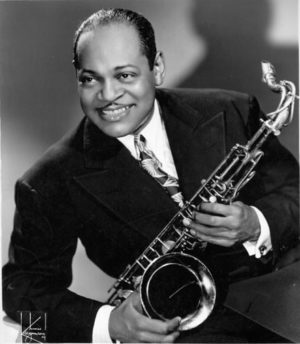
© William P. Gottlieb Library of Congress
Coleman Hawkins was born in St. Joseph, Missouri, on November 21st, 1904. Young Coleman Hawkins was given classical music lessons on the cello and he continued to play the cello through his adolescent years but doubled on the C-melody saxophone with local dance bands.
Vaudevillian Mamie Smith came through Kansas City on a tour, supplementing her band with local musicians. The 16-year-old Coleman Hawkins immediately impressed her with his skills at both reading music and improvisation. The following year on the road with Smith’s troupe gave Coleman Hawkins a life’s worth of professional and personal lessons.
He soon came to the attention of bandleader Fletcher Henderson. The early 1920s was a burgeoning time for jazz, and a virtuoso like Hawkins could make an excellent living by freelancing in nightclubs, playing theatre dates and recording. Henderson was eventually able to offer Coleman Hawkins full-time employment, and the saxophonist remained a featured member of the band for a decade.
The arrival of Louis Armstrong in the Henderson band in late 1924 for a year-long stint was to have a profound impact on the music world in general and on the 20-year-old Coleman Hawkins in particular. Hawkins was one of the first jazz artists to begin transforming Armstrong’s example into personal terms, but it would be a lengthy process. – Loren Schoenberg, liner note excerpt Mosaic Records: Classic Coleman Hawkins Sessions 1922-1947
Hawk Variations
Solo Session
Probably January 1945
Given his love of Bach and Pablo Casals and his own unquenchable thirst for self-expression, it was inevitable that Coleman Hawkins would move towards solo performances.
During his European jaunt, he began surrounding his songs with unaccompanied introductions and codas. For all we know, he may have been doing this in theaters as far back as the Mamie Smith days.
Harry Lim, a Javanese jazz lover who came to America in 1939, first produced jam sessions in Chicago and New York and then founded Keynote Records, a premier small jazz label. In an article for Metronome magazine in May, 1944, Lim dubbed Coleman Hawkins the Picasso of Jazz.
The Picasso of Jazz
Harry Lim; Metronome magazine May 1944
“For an amazing number of years, Coleman Hawkins has been among the style-setters, not only for tenor-saxists, but for all horn players. This he accomplished by keeping ahead of the times, by going through several phases of self-imposed style changes, and with an inborn musical genius which is rare in any musician.
In my estimation Coleman Hawkins stands alone as the finest and most important individual musician on today’s jazz scene, irrespective of instrument. That is true, I think, even taking into consideration the present-day playing capabilities of men like Benny Goodman, Teddy Wilson and a few others, whom we consider the greatest and most significant musicians as far as the present and future of jazz are concerned…
The most amazing thing about this man is the fact that he rises above his surroundings. He can be put with the worst rhythm section in the world and yet play some of the most magnificent stuff ever heard…Hawk develops his choruses as a logical sequence of beautiful phrases. The second chorus follows the first one naturally. This then, friends, is the difference between Coleman Hawkins and an ordinary “chorus blower” whose ninth chorus has absolutely no relation to the tenth.
Many critics who cling so desperately to the old “pure Fletcher Henderson Hawk” complain about the reedy buzz tone he has been using since coming back from Europe, but Hawk uses this device only as a climatic effect, this in contrast to his imitators, who use it till they empty the joint in which they’re playing.
You can take this for a fact: Hawk is a jazz musician who is still continuously advancing his playing, whose harmonic ideas become more daring with every subsequent recording date. In fact, the time has come when a jazz musician of Hawkins’ status should be taken in hand by a prominent concert promoter and a serious concert tour be mapped out for him. When an American composer, familiar with jazz and the classics both, should write a modern concerto for tenor sax and orchestra with Coleman Hawkins in mind.
He’s an ardent classical music fan, has a fine personal music library of classical discs. On a recording session we had not so long ago he confided to me that he would like to make an unaccompanied solo record, on the order of the cello records of Pablo Casals.
Yes, it is with musicians like Coleman Hawkins that the future of jazz lies”.
Coleman Hawkins
Live Performance 1935
Accompanied by pianist Leo de la Fuente, Coleman Hawkins announces and plays “I Wish That I Were Twins”. Filmed at Pulchri Studio, Lange Voorhout, The Hague, Netherlands.
“It was unnerving how intently Coleman Hawkins could listen. You’d be playing and suddenly you’d be aware of someone standing off to your right. If you looked over, you’d see him with his arms folded and his head down just a little, watching and listening to everything. He did that for as long as I knew him.”
George Duvivier
Coleman Hawkins
Selected Jazz Albums
By Scott Yanow
Classic Coleman Hawkins Sessions 1922-1947 (8 CDs)
Despite being a very technically skilled musician and an expert sight-reader, Hawkins did not really come into his own until 1924-25. By then he had followed up his stint with Smith by joining the new Fletcher Henderson Orchestra in 1923. His early playing on recordings are often full of colorful effects but All of that changed after Louis Armstrong joined Henderson in mid-1924, showing Hawkins and the other musicians that one should “tell a story” in their playing.
The eight-CD Mosaic set, which contains most of Hawkins’ more significant recordings of 1922-47, features the tenor evolving quickly with the times. After one representative selection with Mamie Smith, Hawkins is heard on his finest recordings from his decade (1924-34) with the Fletcher Henderson Orchestra including 1926’s “The Stampede.” Hawkins’ statement on that piece is considered the first major recorded tenor solo.
The set contains Hawkins’ contributions to many all-star groups, and his stunning playing on Dec. 23, 1943 with pianist Eddie Heywood, bassist Oscar Pettiford, and drummer Shelly Manne that resulted in a hard-swinging and extended version of “The Man I Love.” Also included is Hawkins leading some bebop sessions and taking the first unaccompanied tenor-sax solo ever recorded (not counting a brief warm-up by Gene Sedric a few years earlier that was privately taped). On the two-part “Hawk’s Variation” from 1945, which precedes his more famous “Picasso” from 1948, Hawkins plays quite freely, sounding nothing like the tenor player who had debuted with Mamie Smith 24 years earlier.
Discography
The vision of this set is to present selected Coleman Hawkins recordings mainly from the 1930s and 1940s as originally recorded on labels currently owned by Sony Music (Banner, Bluebird, Brunswick, Cameo, Clarion, Columbia, Conqueror, Domino, Harmony, Lincoln, Melotone, OKeh, Oriole, Perfect, Romeo, Signature, Velvet Tone, Victor, Vocalion and “X”).
We have also included sessions that currently have no ownership and are in the public domain (Baronet, Ca-Song, Continental, Manor and Regis). The criteria for admission then fell on all recordings led by Hawkins in addition to sessions where as a sideman for other bands he solos for more than 16 bars.
However, in some cases, there will be a stretching of the boundaries. For example, Among My Souvenirs from Session (QQ) has a short Hawkins solo but is retained so that the session can be presented in its entirety. And Cloudy Skies is only a paraphrase of the melody by Hawkins but is included here to keep the entire session intact. Within this concept, representative samplings of titles from the ‘20s add as a springboard to this package. Hawkins’ European recordings from the ‘30s are owned by EMI and therefore have not been added to this package.
For the purposes of this discography, only the first issue number of each matrix is listed unless contemporaneous issues exist. The personnel and instrumentation reflect only the titles represented in this set and not the entire session.
To the best of our knowledge, this discography is presented in the order in which each take was recorded. However, the CDs contained in this set are sequenced with the master take first and then any alternates at the conclusion of the disc. An exception to this rule is found in Session (EEE) and is explained in the Producer’s Note at the end of this discography. Any sides that have been listed in discographies but are missing from the vaults or possibly in private collections are listed as unissued, master no longer exists.
This discography is compiled from the following reference materials: Hendersonia by Walter C. Allen (self published), Benny Carter: A Life In American Music by Morroe Berger, Ed Berger and James Patrick (Scarecrow Press), The Tenor Saxophone Of Coleman Hawkins 1929-1942 by Jan Evensmo (self published), The Jazz Discography by Tom Lord (Cadence Jazz Books), Jazz Records 1897-1942 (Fifth Edition) by Brian Rust (Storyville), Jimmy Dorsey: A Study In Contrasts by Robert L. Stockdale (Scarecrow Press) and Coleman Hawkins Volume I 1922-1944 and Coleman Hawkins Volume II 1945-1967 by Jean-Francois Villetard (Micography).
Label abbreviations: Ban for Banner, BB for Bluebird, Br for Brunswick, Cam for Cameo, Cl for Clarion, Col for Columbia, Cq for Conqueror, Cont for Continental, Dom for Domino, Har for Harmony, Lin for Lincoln, Mel for Melotone, OK for OKeh, Or for Oriole, Par for Parlophone, Per for Perfect, RCA Vic for RCA Victor, Ro for Romeo, Sig for Signature, VT for Velvet Tone, Vic for Victor, Voc for Vocalion.
Country codes: (C) for Canada, (D) for Denmark, (E) for England, (F) for France, (G) for Germany, (J) for Japan, (Sd) for Sweden.
________________________________________________________________________
(A) MAMIE SMITH AND HER JAZZ HOUNDS: poss. Johnny Dunn, unknown (tp), unknown (tb), Ernest Elliott (cl), Coleman Hawkins (ts), poss. George Bell (vln), poss. Harvey Brooks (p), unknown (woodblocks), Mamie Smith (vcl).
NYC, December 20, 1922
S-71-112-B I’m Gonna Get You OK 4781
Note: Part of the personnel sighted above comes from Bubber Miley discographers Bo Scherman, Göran Eriksson, Nils-Gunnar Anderby and Göran Wallén who have amended prior discographical errors in regards to this session. Both Miley and cornetist and trumpeter Joe Smith have been noted as being on this session.
________________________________________________________________________
(B) FLETCHER HENDERSON AND HIS ORCHESTRA: Elmer Chambers (cor), prob. Teddy Nixon (tb), Don Redman (cl), Coleman Hawkins (ts), Fletcher Henderson (p), Charlie Dixon (bjo), poss. Billy Fowler (bass sax), prob. Kaiser Marshall (d), Raymond Mathews (arr).
NYC, September 13, 1923
81211-3 Dicty Blues (RM-arr) Col A3995
________________________________________________________________________
(C) FLETCHER HENDERSON AND HIS ORCHESTRA: Elmer Chambers, Howard Scott (cor), Charlie Green (tb), Don Redman (cl, as), Coleman Hawkins (ts), Fletcher Henderson (p), Charlie Dixon (bjo), Ralph Escudero (tu), Kaiser Marshall (d), William C. Polla (arr).
NYC, September 8, 1924
81981-3 He’s The Hottest Man In Town (WCP-arr) Col 209-D
________________________________________________________________________
(D) FLETCHER HENDERSON AND HIS ORCHESTRA: Russell Smith, Joe Smith (tp), Rex Stewart (cor), Benny Morton (tb), Don Redman (cl, as, arr), Buster Bailey (cl, as), Coleman Hawkins (cl, ts), Fletcher Henderson (p), Charlie Dixon (bjo), Ralph Escudero (tu), Kaiser Marshall (d).
NYC, May 14, 1926
w142205-3 The Stampede (DR-arr) Col 654-D
________________________________________________________________________
(E) FLETCHER HENDERSON’S ORCHESTRA: Russell Smith, Joe Smith, Tommy Ladnier (tp), Jimmy Harrison, Benny Morton (tb), Don Redman (cl, as, arr), Buster Bailey (cl, as), Coleman Hawkins (cl, ts), Fletcher Henderson (p), Charlie Dixon (bjo), June Cole (tu), Kaiser Marshall (d).
NYC, April 27, 1927
BVE 38496-1 St. Louis Shuffle (DR-arr) AFRS #64 (ET)
BVE 38496-2 St. Louis Shuffle (DR-arr) Vic 20944
BVE 38496-3 St. Louis Shuffle (DR-arr) BB 10246
Note: The first issue of -1 came out on a 16” transcription disc and commercially on “X” EP (EVA 1) and LP (LVA 3013).
________________________________________________________________________
(F) FLETCHER HENDERSON & HIS ORCHESTRA: Same as (E) except add Fats Waller (p).
NYC, May 11, 1927
w144132-2 Whiteman Stomp (DR-arr) Col 1059-D
________________________________________________________________________
(G) THE DIXIE STOMPERS: Russell Smith, Tommy Ladnier (tp), Jimmy Harrison (tb), Buster Bailey, Jerome Don Pasquall (cl, as), Coleman Hawkins (cl, ts), Fletcher Henderson (p), Charlie Dixon (bjo), Don Redman, Jack Purvis (arr).
NYC, October 24, 1927
144897-2 Goose Pimples (poss. DR-arr) Har 545-H, Diva 2545-G, VT 1545-V
144898-2 Baltimore (JP-arr) Har 526-H, Diva 2526-G, VT 1526-V
Note: It has been suggested that Fletcher Henderson is not the pianist on Goose Pimples.
________________________________________________________________________
(H) CLARENCE WILLIAMS JAZZ KINGS: Ed Allen (cor), Ed Cuffee (tb), Buster Bailey (cl, as), Coleman Hawkins (cl, ts), Clarence Williams (p), LeRoy Harris (bjo), Cyrus St. Clair (tu).
NYC, January 12, 1928
w145521-1 Dreaming The Hours Away Col 14287-D
________________________________________________________________________
(I) FLETCHER HENDERSON AND HIS ORCHESTRA: Russell Smith, Joe Smith, Bobby Stark (tp), Jimmy Harrison, Benny Morton (tb), Buster Bailey, Jerome Don Pasquall (cl, as), Coleman Hawkins (cl, ts), Fletcher Henderson (p), Charlie Dixon (bjo), June Cole (tu), Kaiser Marshall (d).
NYC, March 14, 1928
w145763-3 King Porter Stomp Col 1543-D
Note: This early version of King Porter Stomp is a head arrangement based on ideas by Coleman Hawkins.
________________________________________________________________________
(J) THE DIXIE STOMPERS: Rex Stewart (cor), Bobby Stark (tp), Charlie Green (tb), Buster Bailey (cl), Coleman Hawkins (ts), Fletcher Henderson (p), Charlie Dixon (bjo), Jerome Don Pasquall (bass sax), Kaiser Marshall (d), Maceo Pinkard (arr).
NYC, April 6, 1928
145977-2 I’m Feelin’ Devilish
(Oh By Golly Oh) (MP-arr) Har 974-H, Diva 2974-G,
VT 1974-V
________________________________________________________________________
(K) HENDERSON’S ROSELAND ORCHESTRA: Rex Stewart (cor), Bobby Stark (tp), Jimmy Harrison, poss. Charlie Green (tb), Buster Bailey, Harvey Boone (cl, as), Coleman Hawkins (cl, ts), Fletcher Henderson (p), Clarence Holiday (bjo), poss. Del Thomas (tu), Benny Carter (arr).
NYC, c. April 1929
3799-A Raisin’ The Roof (BC-arr) Cam 9175, Lin 3202, Ro 977
________________________________________________________________________
(L) FLETCHER HENDERSON & HIS ORCHESTRA: Rex Stewart (cor), Russell Smith, Bobby Stark (tp), Jimmy Harrison, prob. Charlie Green (tb), Harvey Boone, poss. Arville Harris (cl, as), Coleman Hawkins (ts), Fletcher Henderson (p), Clarence Holiday (bjo), poss. Del Thomas (tu), Kaiser Marshall (d), Benny Carter (arr).
NYC, May 16, 1929
w148540-2 Blazin’ (BC-arr) Col 1913-D
w148541-3 The Wang-Wang Blues (BC-arr) –
________________________________________________________________________
(M) MCKINNEY’S COTTON PICKERS: Joe Smith, Sidney DeParis, Leonard Davis (tp), Claude Jones (tb), Benny Carter (as), Don Redman (as, vcl, arr), Coleman Hawkins, Ted McCord (ts), Fats Waller (p), Dave Wilborn (bjo), Billy Taylor (tu), Kaiser Marshall (d).
NYC, November 7, 1929
BVE 57140-3 Wherever There’s A
Will, Baby (DR-vcl, arr) RCA (J) RA-47 (LP)
BVE 57140-2 Wherever There’s A
Will, Baby (DR-vcl, arr) Vic 22736
________________________________________________________________________
(N) MOUND CITY BLUE BLOWERS: Glenn Miller (tb), Pee Wee Russell (cl), Coleman Hawkins (ts), Eddie Condon (bjo), Jack Bland (g), Pops Foster (b), Gene Krupa (d), Red McKenzie (comb).
NYC, November 14, 1929
BVE 57145-3 Hello Lola Vic V38100
BVE 57146-3 One Hour –
Note: Metal parts and test pressings exist with -1R shown as the take letter, however, they all play the same as -3.
Although Pops Foster has been listed as the bassist in prior discographies, Eddie Condon claimed it was actually Al Morgan. However, Dan Morgenstern has suggested that Condon probably believed the bassist to be Morgan because he was on the second Red McKenzie date with Hawkins. Since Morgan is definite for a Jones-Collins Astoria Hot Eight record date in New Orleans the day before, it is highly doubtful he made it to New York to record this session
________________________________________________________________________
(O) FLETCHER HENDERSON & HIS ORCHESTRA: Rex Stewart (cor), Russell Smith, Bobby Stark (tp), Jimmy Harrison, Claude Jones (tb), Benny Carter (cl, as), Harvey Boone (as), Coleman Hawkins (ts), Fletcher Henderson (p), Clarence Holiday (g), John Kirby (b), Walter Johnson (d), John Nesbitt (arr).
NYC, October 3, 1930
w150857-1 Chinatown, My Chinatown (JN-arr) Col 2329-D
________________________________________________________________________
(P) FLETCHER HENDERSON & HIS ORCHESTRA: Same as (O) except Kirby (tu).
NYC, December 2, 1930
w150998-2 What Good Am I Without You? Col 2352-D
________________________________________________________________________
(Q) CHOCOLATE DANDIES: Rex Stewart (cor), Jimmy Harrison (tb, vcl), Benny Carter (as, vcl, arr), Coleman Hawkins (ts), Horace Henderson (p), prob. Clarence Holiday (g), John Kirby (b).
NYC, December 4, 1930
w404566-A Goodbye Blues (BC-vcl, arr) Par (E) R 882
________________________________________________________________________
(R) THE CHOCOLATE DANDIES -1 / CHOCOLATE DANDIES -2: Same as (Q) except Bobby Stark (tp) replaces Stewart; Carter doubles on clarinet and trumpet; Kirby (tu).
NYC, December 31, 1930
w404596-B Cloudy Skies (BC-arr) -1 Par (E) R 1273
w404597-B Got Another Sweetie Now (JH-vcl) (BC-arr) -1 Par (E) R 963
w404598-B Bugle Call Rag (BC-arr) -2 Col 2543-D
w404599-B Dee Blues (BC-arr) -2 –
Note: Listed on the label of both sides of Columbia 2543-D are control numbers w151823-1 for Bugle Call Rag and w151824-1 for Dee Blues.
________________________________________________________________________
(S) FLETCHER HENDERSON & HIS ORCHESTRA: Rex Stewart (cor), Russell Smith, Bobby Stark (tp), Jimmy Harrison (tb, vcl), Claude Jones (tb), Benny Carter (cl, as, arr), Harvey Boone (as), Coleman Hawkins (ts), Fletcher Henderson (p), Clarence Holiday (bjo), John Kirby (tu), Walter Johnson (d), Lois Deppe (vcl).
NYC, February 5, 1931
w151276-2 My Pretty Girl (LD-vcl) (BC-arr) Col 2586-D
w151277-2 Sweet And Hot (JH-vcl) (BC-arr) Col 2414-D
Note: Sweet And Hot is a stock arrangement written by Archie Bleyer and re-worked by Benny Carter.
________________________________________________________________________
(T) FLETCHER HENDERSON & HIS ORCHESTRA: Rex Stewart (cor), Russell Smith, Bobby Stark (tp), Claude Jones, Benny Morton (tb), Russell Procope, Harvey Boone (cl, as), Coleman Hawkins (cl, ts, bari), Fletcher Henderson (p, arr), Clarence Holiday (g), John Kirby (tu), Walter Johnson (d), Bill Challis, Don Redman, Horace Henderson (arr).
NYC, March 19, 1931
w151441-2 Clarinet Marmalade (BCh-arr) Col 2513-D
w151442-2 Sugar Foot Stomp (FH/DR-arr) –
w151442-1 Sugar Foot Stomp (FH/DR-arr) –
w151443-1 Hot And Anxious -1 (HH-arr) Col 2449-D
-1 Horace Henderson (p) replaces Henderson.
Note: Columbia 2449-D as BALTIMORE BELL HOPS.
________________________________________________________________________
(U) CONNIE’S INN ORCHESTRA: Same as (T).
Camden, NJ, April 29, 1931
Supervised by Eli Oberstein
BRC 53066-2 Sugar Foot Stomp (FH/DR-arr) “X” EVA-2 (EP), LVA-3013 (LP)
BRC 53066-1 Sugar Foot Stomp (FH/DR-arr) Vic 22721
Note: The alternate take (-2) of Sugar Foot Stomp is misidentified as being issued on 78 in the discography of the Bluebird LP The Complete Fletcher Henderson 1927-1936.
________________________________________________________________________
(V) MOUND CITY BLUE BLOWERS: Muggsy Spanier (cor), Jimmy Dorsey (cl), Coleman Hawkins (ts), Jack Russin (p), Eddie Condon (bjo), Jack Bland (g), Al Morgan (b), Frank “Josh” Billings (perc), Red McKenzie (vcl, comb).
NYC, June 30, 1931
w404966-C Georgia On My Mind (RM-vcl) Cl 5389-C, Har 1375-H,
OK 41515, VT 2453-V
w404967-B I Can’t Believe That You’re
In Love With Me (RM-vcl) Same issues as matrix 404966
w404994-A Darktown Strutters Ball (RM-vcl) Cl 5392-C, Har 1378-H,
OK 41526, VT 2456-V
w404995-A You Rascal You (RM-vcl) Same issues as matrix 404994
Note: The Clarion, Harmony and Velvet Tone releases as TENNESSEE MUSIC MEN and the vocal credit for Red McKenzie as “King & King” on You Rascal You and as “Jack King” on the remaining titles. The OKeh releases as “with vocal refrain”.
The Clarion, Harmony and Velvet Tone releases all list control numbers on the label and not the regular matrix number. Listed is w351051 for Georgia On My Mind, w351049 for I Can’t Believe That You’re In Love With Me, w351052 for Darktown Strutters Ball and w130482 for You Rascal You.
Jimmy Dorsey is listed in discographies as playing alto saxophone on this session, however, aural evidence suggests he only plays clarinet.
________________________________________________________________________
(W) FLETCHER HENDERSON AND HIS CONNIE (sic) INN ORCHESTRA: Rex Stewart (cor), Bobby Stark (tp), Claude Jones (tb), Russell Procope (cl, as), Edgar Sampson (as, vln), Coleman Hawkins (ts), Fletcher Henderson (p), Clarence Holiday (g), John Kirby (tu), Walter Johnson (d, bells), Dick Robertson (vcl), Archie Bleyer (arr).
NYC, July 31, 1931
BRC 70140-1 Oh, It Looks Like Rain (DR-vcl) (AB-arr) Vic 22786
BRC 70141-1 Sweet Music (DR-vcl) Vic 22775
BRC 70143-1 Malinda’s Weddin’ Day (DR-vcl) –
________________________________________________________________________
(X) FLETCHER HENDERSON & HIS ORCHESTRA: Rex Stewart (cor), Russell Smith, Bobby Stark (tp), J.C. Higginbotham (tb), Russell Procope (cl, as), Edgar Sampson (as), Coleman Hawkins (ts), Fletcher Henderson (p), Clarence Holiday (g), John Kirby (tu), Walter Johnson (d, bells), Les Reis (vcl), Frank Skinner (arr).
NYC, October 15, 1931
151846-3 It’s The Darndest Thing (LR-vcl) (FS-arr) Col 2565-D
________________________________________________________________________
(Y) FLETCHER HENDERSON & HIS ORCHESTRA: Rex Stewart (cor), Russell Smith, Bobby Stark (tp), J.C. Higginbotham (tb), Russell Procope (as), Edgar Sampson (as), Coleman Hawkins (ts), Fletcher Henderson (p), Clarence Holiday (g), John Kirby (tu), Walter Johnson (d), Archie Bleyer (arr).
NYC, October 16, 1931
w151851-1 Business In F (AB-arr) Col 2615-D
________________________________________________________________________
(Z) FLETCHER HENDERSON AND HIS ORCHESTRA: Rex Stewart (cor), Russell Smith, Bobby Stark (tp), J.C. Higginbotham, Sandy Williams (tb), Russell Procope, Edgar Sampson (as), Coleman Hawkins (ts), Fletcher Henderson (p), Clarence Holiday (g), John Kirby (b), Walter Johnson (d, bells), John Dickens, Harlan Lattimore (vcl).
NYC, March 10, 1932
BSHQ 71938-1 Strangers (JD-vcl) Vic 22955
BSHQ 71942-1 I Wanna Count Sheep
(Till The Cows Come Home) (HL-vcl) –
Note: The German RCA Victor LP LPM 10121 (Fletcher Henderson And His Orchestra 1927-1934) claims that matrix 71938-2 is an unissued take, however, it is actually -1 with the vocal spliced out.
________________________________________________________________________
(AA) CONNIE’S INN ORCHESTRA: Rex Stewart (cor), probably Leora Henderson, Bobby Stark (tp), J.C. Higginbotham, Sandy Williams (tb), Russell Procope (cl, as), Edgar Sampson (as), Coleman Hawkins (ts), Fletcher Henderson (p, arr), Clarence Holiday (g), John Kirby (tu, b), Walter Johnson (d), Harlan Lattimore (vcl), Gene Gifford (arr).
NYC, March 11, 1932
Supervised by Justin Ring
B11445-A Casa Loma Stomp (GG-arr) Ban 32701, Dom 113,
Mel M12340, Or 2654,
Per 15738
B11446-A Blue Moments (FH-arr) unissued, test exists
B11446-B Blue Moments (FH-arr) Col C4L 19 (LP)
B11447-B How Am I Doin’, Hey Hey (HL-vcl) unissued, test exists
B11447-A How Am I Doin’, Hey Hey (HL-vcl) Ban 32440, Or 2466,
Per 15603, Ro 1839
Note: A test pressing exists of B11445-B, but it plays the same as the master take (-A).
Matrices B11446 and B11447 were to be released on Melotone M12368, however, this 78 was never issued.
According to the ARC ledgers the original or alternate title of Blue Moments was Nostalgias.
For matrix B11447, there is a bogus matrix number (11744 is shown in the wax and label) on all releases, however, it is only a dub of the master take (-A). Numerals appearing after this fake matrix are stamper numbers and not different take numbers.
An alternate take exists for both Blue Moments and How Am I Doin’, Hey Hey, however, they were unavailable for us to include in this package.
Although Blue Moments is listed as -A in the liner notes of Columbia C4L 19, this version is actually an edited, sped-up version of -B and not an alternate take.
Banner 32701, Domino 113, Oriole 2654 and Perfect 15738 as LOUISIANA RHYTHMAKERS. Banner 32440, Oriole 2466, Perfect 15603 and Romeo 1839 as DUKE WILSON & HIS TEN BLACKBERRIES.
________________________________________________________________________
(BB) FLETCHER HENDERSON AND HIS ORCHESTRA: Rex Stewart (cor), Russell Smith, Bobby Stark (tp), J.C. Higginbotham, Sandy Williams (tb), Russell Procope, Hilton Jefferson (as), Coleman Hawkins (ts), Fletcher Henderson (p, arr), Freddie White (g), John Kirby (b), Walter Johnson (d), Katherine Handy (vcl).
NYC, December 9, 1932
Supervised by John Hammond
152324-1 Honeysuckle Rose (FH-arr) Col 2732-D
152325-1 New King Porter Stomp (FH-arr) Col (E) CB 701, OK 41565
152326-1 Underneath The Harlem Moon
(KH-vcl) (FH-arr) Col 2732-D
Note: Columbia (E) CB 701 as King Porter Stomp.
________________________________________________________________________
(CC) HAWKINS ORCHESTRA: Henry Allen (tp), Dickie Wells (tb), Russell Procope (cl), Coleman Hawkins (ts), Don Kirkpatrick (p), Bernard Addison (g), John Kirby (b), Walter Johnson (d).
NYC, March 27, 1933
Supervised by John Hammond
B13183-A Someday, Sweetheart Pirate (Sd) MPC-513 (EP)
B13184-A I Wish I Could Shimmy Like My Sister Kate –
Note: The Pirate EP lists this as ALLEN-HAWKINS ORCHESTRA, however, in the Brunswick ledgers and file cards this is credited as HAWKINS ORCHESTRA.
________________________________________________________________________
(DD) ALLEN-HAWKINS AND THEIR ORCHESTRA: Henry Allen (tp, vcl), Dickie Wells (tb), Hilton Jefferson (as), Coleman Hawkins (ts), Horace Henderson (p, arr), Bernard Addison (g, bjo), John Kirby (tu, b), Walter Johnson (d).
NYC, July 21, 1933
13616-1 The River’s Takin’
Care Of Me (HA-vcl) Ban 32840, Mel M 12769, Or 2746,
Per 15808, Ro 2119
13617-1 Ain’tcha Got Music (HA-vcl) Same issues as matrix 13616.
13618-1 Stringin’ Along On
A Shoe String (HA-vcl) Ban 32829, Mel M 12759, Or 2739,
Per 15802, Ro 2112
13619-1 Shadows On The Swanee Same issues as matrix 13618.
Note: Horace Henderson is probably the arranger on all titles from this session.
Alternate takes (-2) exist for both Stringin’ Along On A Shoe String and Shadows On The Swanee, however, they are known to exist only on a poor sounding cassette tape dub that came from the collection of Henry Allen. In addition to the poor quality, the solos by Hawkins are very similar to that of the master takes.
________________________________________________________________________
(EE) FLETCHER HENDERSON AND HIS ORCHESTRA: Russell Smith, Bobby Stark, Henry Allen (tp), Dicky Wells (tb), Hilton Jefferson, Russell Procope (cl, as), Coleman Hawkins (cl, ts), Fletcher Henderson (p, arr), Bernard Addison (g), John Kirby (b), Walter Johnson (d), Horace Henderson (arr).
NYC, August 18, 1933
13827-2 Yeah Man (HH-arr) Br (G) A-9771
13827-1 Yeah Man (HH-arr) Voc 2527
13828-2 King Porter Stomp (FH-arr) Br (G) A-9771
13828-1 King Porter Stomp (FH-arr) Voc 2527
Add Sandy Williams (tb)
13829-1 Queer Notions (HH-arr) Voc 2583
13830-2 Can You Take It? (FH-arr) Col 35671
13830-1 Can You Take It? (FH-arr) Voc 2583
Note: Vocalion 2527 credits matrix 13828 as King Porter’s Stomp.
________________________________________________________________________
(FF) FLETCHER HENDERSON AND HIS ORCHESTRA: Russell Smith, Bobby Stark (tp), Henry Allen (tp, vcl), Dicky Wells, Claude Jones (tb), Russell Procope (cl, as), Hilton Jefferson (as), Coleman Hawkins (ts), Horace Henderson (p, arr), Bernard Addison (g), John Kirby (tu, b), Walter Johnson (d), Fletcher Henderson, Will Hudson (arr).
NYC, September 22, 1933
Supervised by John Hammond
w265135-2 Queer Notions (HH-arr) Col (E) CB 678
w265136-2 It’s The Talk Of The Town (FH-arr) previously unissued
w265136-3 It’s The Talk Of The Town (FH-arr) Col 2825-D
w265137-2 Night Life (WH-arr) Col (E) CB 727
w265138-2 Nagasaki (HA-vcl) (HH-arr) -1 Col 2825-D
-1 unknown (vib) (not Johnson).
Note: The metal part of It’s The Talk Of The Town (-3) has “Please test for Mr. Hammond” etched in the run-on groove area.
________________________________________________________________________
(GG) COLEMAN HAWKINS & HIS ORCH.: Henry Allen (tp), J.C. Higginbotham (tb), Hilton Jefferson (cl, as), Coleman Hawkins (ts), Horace Henderson (p, arr), Bernard Addison (g), John Kirby (b), Walter Johnson or Sid Catlett (d).
NYC, September 29, 1933
Supervised by John Hammond
w265143-2 The Day You Came Along (HH-arr) Par (E) R 1685
w265144-1 Jamaica Shout (HH-arr) Jazz Oracle (C) BDW 8047 (CD)
w265144-2 Jamaica Shout (HH-arr) OK 41566, Par (E) R 1685
w265145-2 Heart-Break Blues (HH-arr) OK 41566, Par (E) R 1766,
Par (G) R 1766
Note: Matrix w265145 was shown as Heartbreak Blues on the OKeh release.
________________________________________________________________________
(HH) HORACE HENDERSON & HIS ORCH. -1 / FLETCHER HENDERSON AND HIS ORCHESTRA -2: Same as (FF).
NYC, October 3, 1933
Supervised by John Hammond
w265151-1 Rhythm Crazy (HH-arr) -1 Par (E) R 1743
w265152-1 Ol’ Man River (HA-vcl) -1 Par (E) R 1766
w265153-2 Minnie The Moocher’s
Wedding Day (HH-arr) -1 Par (E) R 2031, Par (G) R 2031
w265155-1 I’ve Got To Sing A Torch Song -2 Col (E) CB 701
Note: For matrix w265153 the actual title on the label of Parlophone R 2031 is The Anniversary of Minnie The Moocher’s Wedding Day.
________________________________________________________________________
(II) ALLEN-HAWKINS AND THIER ORCHESTRA: Henry Allen (tp, vcl), Benny Morton (tb), Edward Inge (as, cl), Coleman Hawkins (ts), Horace Henderson (p), Bernard Addison (g), Bob Ysaguirre (b), Manzie Johnson (d).
NYC, November 9, 1933
14282-1 Hush My Mouth
(If I Ain’t Goin’ South) (HA-vcl) Ban 32915, Mel M 12858,
Or 2806, Per 15858, Ro 2179
14283-2 You’re Gonna Lose Your Gal (HA-vcl) previously unissued
14283-1 You’re Gonna Lose Your Gal (HA-vcl) Ban 32901, Cq 8265,
Mel M 12842, Or 2797,
Per 15851, Ro 2170
14284-1 Dark Clouds (HA-vcl) Same issues as matrix 14282.
14285-2 My Galveston Gal (HA-vcl) previously unissued
14285-1 My Galveston Gal (HA-vcl) Same issues as matrix 14283.
Note: Oriole 2806 as HENRY ALLEN AND HIS ORCHESTRA; and the Romeo releases as ALLEN RED AND HIS ORCHESTRA.
________________________________________________________________________
(JJ) BENNY GOODMAN AND HIS ORCHESTRA -1 / BENNY GOODMAN & HIS ORCHESTRA -2: Mannie Klein, Charlie Margulis (tp), Sonny Lee (tb), Benny Goodman (cl), Coleman Hawkins (ts), Arthur Schutt (p, arr), Dick McDonough (g), Artie Bernstein (b), Gene Krupa (d, chimes), Mildred Bailey (vcl), George Bassman (arr).
NYC, February 2, 1934
Supervised by John Hammond
w152701-3 Georgia Jubilee (AS-arr) -1 Col 2907-D
w152703-2 Ol’ Pappy (MB-vcl) (GB-arr) -2 Col 2892-D
w152704-2 Emaline (MB-vcl) -1 Col 2907-D
________________________________________________________________________
(KK) FLETCHER HENDERSON AND HIS ORCHESTRA: Russell Smith, Joe Thomas, Henry Allen (tp), Claude Jones, Keg Johnson (tb), Buster Bailey (cl), Hilton Jefferson, Russell Procope (cl, as), Coleman Hawkins (ts), Fletcher Henderson (p, arr), Bernard Addison (g), John Kirby (b), Vic Engle (d), Charles Holland (vcl), Will Hudson, Russ Morgan (arr).
NYC, March 6, 1934
BS 81787-2 Hocus Pocus (WH-arr) RCA Vic LPV 556 (LP)
BS 81787-1 Hocus Pocus (WH-arr) BB B-5682
BS 81788-2 Phantom Fantasie (RM-arr) Vic 24699
BS 81789-2 Harlem Madness (CH-vcl) (FH-arr) –
BS 81790-2 Tidal Wave (RM-arr) previously unissued
BS 81790-1 Tidal Wave (RM-arr) BB B-5682
Note: An alternate (-1) exists on Phantom Fantasie, however it is not included in this package since the only solo spot goes to Hawkins and it is nearly identical to the master take (-2).
________________________________________________________________________
(LL) COLEMAN HAWKINS: Coleman Hawkins (ts), Buck Washington (p).
NYC, March 8, 1934
265172-1 It Sends Me previously unissued
265172-2 It Sends Me Par (E) R 1837
265173-2 I Ain’t Got Nobody Par (E) R 1825
265175-2 On The Sunny Side Of The Street previously unissued
265175-1 On The Sunny Side Of The Street Par (E) R 1825
Note: Matrix 265174 is a piano solo by Buck Washington.
Matrix 275175-2 has been listed in discographies as being issued on Parlophone A-3938. However, the only take that has surfaced on that 78 is the master take -1.
________________________________________________________________________
(MM) LIONEL HAMPTON AND HIS ORCHESTRA: Dizzy Gillespie (tp), Benny Carter (as, arr), Coleman Hawkins, Chu Berry, Ben Webster (ts), Lionel Hampton (vib, vcl), Clyde Hart (p), Charlie Christian (g), Milt Hinton (b), Cozy Cole (d).
NYC, September 11, 1939
Supervised by Leonard Joy
BS 041406-1 When Lights Are Low (BC-arr) Vic 26371
BS 041407-1 One Sweet Letter From You
(LH-vcl) (BC-arr) Vic 26393
Note: There is an alternate -2 for When Lights Are Low, however, it is not included here but can be found on Mosaic MD5-238.
________________________________________________________________________
(NN) COLEMAN HAWKINS AND HIS ORCHESTRA: Tommy Lindsay, Joe Guy (tp), Earl Hardy (tb), Jackie Fields, Eustis Moore (as), Coleman Hawkins (ts, arr), Gene Rodgers (p, arr), Oscar Smith (b), Art Herbert (d), Thelma Carpenter (vcl), Hazel Scott (arr).
NYC, October 11, 1939
Supervised by Leonard Joy
BS 042933-8 Meet Doctor Foo (CH-arr) BB B-10477
BS 042934-12 Fine Dinner (GR-arr) BB B-10523
BS 042935-2 She’s Funny That Way (TC-vcl) (HS-arr) previously unissued
BS 042935-1 She’s Funny That Way (TC-vcl) (HS-arr) BB B-10477
BS 042936-1 Body And Soul BB B-10523
Note: Metal parts exist for BS 042933-1 and BS 042934-1, however, they both play as the master takes shown above.
________________________________________________________________________
(OO) LIONEL HAMPTON AND HIS ORCHESTRA: Benny Carter (tp), Edmond Hall (cl), Coleman Hawkins (ts), Lionel Hampton (vib), Joe Sullivan (p), Freddie Green (g), Artie Bernstein (b), Zutty Singleton (d).
NYC, December 21, 1939
Supervised by Leonard Joy
BS 046024-1 Dinah Vic 26557
BS 046025-1 My Buddy Vic 26608
BS 046026-1 Singin’ The Blues Vic 26557
Note: There is an alternate -2 for Dinah, however, it is not included here but can be found on Mosaic MD5-238.
________________________________________________________________________
(PP) COLEMAN HAWKINS’ ALL STAR OCTET: Benny Carter (tp), J.C. Higginbotham (tb), Danny Polo (cl), Coleman Hawkins (ts), Gene Rodgers (p), Lawrence Lucie (g), Johnny Williams (b), Walter Johnson (d).
NYC, January 3, 1940
Supervised by Leonard Joy
BS 046156-1 When Day Is Done BB B-10693
BS 046157-1 The Sheik Of Araby BB B-10770
BS 046158-1 My Blue Heaven –
BS 046159-1 Bouncing With Bean BB B-10693
________________________________________________________________________
(QQ) BENNY CARTER AND HIS ORCHESTRA: Joe Thomas, Lincoln Mills, Russell Smith (tp), Jimmy Archey, Vic Dickenson, Gene Simon (tb), Benny Carter (as, tp, arr), James Powell, Carl Frye (as), Stan Payne, Coleman Hawkins (ts), Eddie Heywood (p), Ulysses Livingston (g), Hayes Alvis (b), Keg Purnell (d), Roy Felton (vcl), Buck Ram (arr).
Liederkranz Hall, NYC, January 30, 1940
Supervised by John Hammond
M 1126-3 Sleep (BC-arr) Meritt 17 (LP)
M 1126-2 Sleep (BC-arr) –
M 1126-BD Sleep (BC-arr) –
M 1126-1 Sleep (BC-arr) Voc / OK 5399
M 1127-1 Among My Souvenirs (RF-vcl) (BC-arr) Voc / OK 5458, Cq 9459
M 1128-3 Fish Fry (BC-arr) Meritt 17 (LP)
M 1128-1 Fish Fry (BC-arr) Voc / OK 5458, Cq 9459
M 1128-2 Fish Fry (BC-arr) Meritt 17 (LP)
M 1128-BD Fish Fry (BC-arr) –
M 1129-BD Slow Freight (BC / BR-arr) –
M 1129-1 Slow Freight (BC / BR-arr) Voc / OK 5399
Note: Slow Freight was initially a Buck Ram stock arrangement but was reworked by Carter.
Absent from this package are two alternate takes of Among My Souvenirs and Six Breakdowns Of Fish Fry.
________________________________________________________________________
(RR) COLEMAN HAWKINS AND HIS ORCHESTRA: Nelson Bryant, Tommy Stevenson, Joe Guy, Tommy Lindsay (tp), Claude Jones, Sandy Williams, Billy Kato (tb), Jackie Fields, Eustice Moore (as), Ernie Powell (as, cl), Coleman Hawkins, Kermit Scott (ts), Gene Rodgers (p), Gene Fields (g), Billy Taylor (b), J.C. Heard (d), Gladys Madden (vcl).
NYC, August 9, 1940
27850-2 Passin’ It Around OK 6284
27851-1 Serenade To A Sleeping Beauty OK 6347
27852-2 Rocky Comfort previously unissued
27852-1 Rocky Comfort OK 6284
27853-1 Forgive A Fool (GM-vcl) OK 6347
Note: Matrix 27850-1 exists as a metal part; however, it is only a dub of -2 and not a true alternate.
Epic (LP) SN 6042 (Swing Street) lists the alternate take -2 for matrix 28752. However, -1 is the take that is used.
Matrix 27853-2 exists as a metal part and a true alternate take, however, Hawkins’ solo is practically identical to the master take (-1).
Some reference works list Billy Kato as Billy Cato. However, the above spelling comes from the 1940 NY Local 802 AFM directory.
________________________________________________________________________
(SS) METRONOME ALL STAR BAND: Cootie Williams, Harry James, Ziggy Elman (tp), Tommy Dorsey, J.C. Higginbotham (tb), Benny Goodman (cl), Benny Carter, Toots Mondello (as), Coleman Hawkins, Tex Beneke (ts), Count Basie (p), Charlie Christian (g), Artie Bernstein (b), Buddy Rich (d).
NYC, January 16, 1941
Supervised by George T. Simon and Leonard Joy
BS 0A60331-1 Bugle Call Rag Vic 27314
BS 0A60332-1 One O’Clock Jump –
________________________________________________________________________
(TT) COUNT BASIE AND HIS ORCHESTRA: Buck Clayton (tp), Harry Edison, Al Killian, Ed Lewis (tp), Ed Cuffee, Dan Minor, Dicky Wells (tb), Earle Warren, Tab Smith (as), Don Byas, Coleman Hawkins, Buddy Tate (ts), Jack Washington (bari), Count Basie (p, arr), Freddie Green (g), Walter Page (b), Jo Jones (d), Buster Harding (arr).
Chicago, April 10, 1941
Supervised by John Hammond
C 3678-2 9:20 Special (BH-arr) CBS (F) 66101 (LP)
C 3678-1 9:20 Special (BH-arr) OK 6244
C 3680-2 Feedin’ The Bean (CB-arr) CBS (F) 66102 (LP)
C 3680-1 Feedin’ The Bean (CB-arr) OK 6180
________________________________________________________________________
(UU) COLEMAN HAWKINS AND HIS ORCHESTRA: Bill Coleman (tp), Andy Fitzgerald (cl), Coleman Hawkins (ts), Ellis Larkins (p), Al Casey (g), Oscar Pettiford (b), Shelly Manne (d).
WOR Studios, NYC, December 8, 1943
Supervised by Bob Thiele
T 1905 Voodte Sig 28101
T 1906-1 How Deep Is The Ocean Sig 28102
T 1907 Hawkins’ Barrel-House Sig 28101
T 1908 Stumpy Sig 28102
Note: Some copies of T 1908 on Signature 28102 list this as Stompy.
________________________________________________________________________
(VV) COLEMAN HAWKINS AND HIS ORCHESTRA –1 / COLEMAN HAWKINS SWING FOUR –2: Coleman Hawkins (ts), Ellis Larkins (p), Jimmy Shirley (g), Oscar Pettiford (b), Max Roach (d).
WOR Studios, NYC, December 18, 1943
Supervised by Bob Thiele
T 1917-alt Lover Come Back To Me previously unissued
T 1917 Lover Come Back To Me –1 Br BL 58030 (LP)
T 1918 Indiana previously unissued
T 19001 Blues Changes –2 Br BL 58030 (LP)
T 19002 These Foolish Things unissued, master no longer exists
________________________________________________________________________
(WW) COLEMAN HAWKINS’ SWING FOUR: Coleman Hawkins (ts), Eddie Heywood (p), Oscar Pettiford (b), Shelly Manne (d).
WOR Studios, NYC, December 23, 1943
Supervised by Bob Thiele
T 1923 Crazy Rhythm Sig 28104
T 1924 Get Happy –
T 19005 The Man I Love Sig 90001 (12”)
T 19006 Sweet Lorraine –
Note: Some pressings of Get Happy have the matrix listed on the label as T1934 and in the run-off groove area on both sides of Signature 28104 there is “-2A”. It is not known if this is a legitimate take number/letter.
Some discographies list an alternate take for The Man I Love on V-Disc 529, however, this is the master take as heard on Signature 90001.
________________________________________________________________________
(XX) COLEMAN HAWKINS AND HIS ALL STARS: Charlie Shavers (tp), Edmond Hall (cl), Coleman Hawkins (ts), Clyde Hart (p), Tiny Grimes (g), Oscar Pettiford (b), Denzil Best (d).
NYC, July 27, 1944
Probably supervised by Irving Berman
S1177 All The Things You Are -1 Regis 7002
S1178 Shivers previously unissued
S1179 Step On It Manor 1036
S1180 It Had To Be You unissued, master no longer exists
S1181 Riding On 52nd Street Regis 7002
S1182 Memories Of You Manor 1036
-1 omit Shavers and Hall.
Note: Regis 7002 does not give an artist credit on the label, but just the personnel.
It has been suggested that this is a Clyde Hart led date and that Hart and Shavers are the arrangers.
________________________________________________________________________
(YY) COZY COLE’S ALL STARS: Charlie Shavers (tp), Hank D’Amico (cl), Walter “Foots” Thomas (as, ts, arr), Coleman Hawkins (ts), Clyde Hart (p), Tiny Grimes (g), Slam Stewart (b), Cozy Cole (d).
NYC, November 14, 1944
Supervised by Don Gabor or Foots Thomas
S-3275 Willow Weep For Me (FT-arr) Cont C-6001
S-3276 Look Here (FT-arr) Cont C-6000
S-3277 I Don’t Stand A Ghost Of A Chance (FT-arr) –
S-3278 Take It On Back (FT-arr) Cont C-6001
________________________________________________________________________
(ZZ) COZY COLE’S ALL STARS: Charlie Shavers (tp), Hank D’Amico (cl), Don Byas, Coleman Hawkins (ts), Johnny Guarnieri (p), Tiny Grimes (g), Slam Stewart (b), Cozy Cole (d).
NYC, November 21, 1944
Possibly supervised by Don Gabor
S-3283 Memories Of You Cont C-6004
S-3285 When Day Is Done Cont C-6014
________________________________________________________________________
(AAA) LEONARD FEATHER AND HIS ALL STARS: Buck Clayton (tp), Edmond Hall (cl), Coleman Hawkins (ts), Leonard Feather (p), Remo Palmieri (g), Oscar Pettiford (b), Specs Powell (d).
NYC, December 1, 1944
Supervised by Leonard Feather
9003 Esquire Jump Cont C-6009
9004 Thanks For The Memory Cont C-6016
________________________________________________________________________
(BBB) COLEMAN HAWKINS: Coleman Hawkins (ts).
NYC, probably January 1945
Probably supervised by Timme Rosenkrantz
B-5-A Hawk’s Variations (Pt. 1) Baronet (D) TR 4, Selmer (F) Y7129
B-5-B Hawk’s Variations (Pt. 2) – –
Note: Some discographies list matrices 9462-5-A and 9463-5-B for the titles shown above.
________________________________________________________________________
(CCC) COLEMAN HAWKINS’ 52ND STREET ALL STARS: Charlie Shavers (tp), Pete Brown (as), Coleman Hawkins, Allen Eager (ts), Jimmy Jones (p), Mary Osborne (g), Al McKibbon (b), Shelly Manne (d).
NYC, February 27, 1946
Supervised by Leonard Feather
PD6VB 1308-1 Say It Isn’t So RCA Vic 40-0131
PD6VB 1309-1 Spotlite –
________________________________________________________________________
(DDD) ESQUIRE ALL-AMERICAN AWARD WINNERS: Charlie Shavers, Buck Clayton (tp), J.J. Johnson (tb), Coleman Hawkins (ts), Harry Carney (bari), Teddy Wilson (p), John Collins (g), Chubby Jackson (b), Shadow Wilson (d).
NYC, December 4, 1946
Supervised by Leonard Feather
D6VB 3369-1 Indiana Winter RCA Vic 40-0137
D6VB 3370-1 Indian Summer –1 RCA Vic 40-0136
–1 omit Clayton.
________________________________________________________________________
(EEE) METRONOME ALL STAR BAND: Charlie Shavers (tp), Lawrence Brown (tb), Johnny Hodges (as), Coleman Hawkins (ts), Harry Carney (bari), Nat “King” Cole (p, vcl), Bob Ahern (g), Eddie Safranski (b), Buddy Rich (d), Frank Sinatra, June Christy (vcl), Sy Oliver (arr).
NYC, December 15, 1946
Supervised by George T. Simon
CO 37177-BD1 Sweet Lorraine (FS-vcl) (SO-arr) previously unissued
CO 37177-3 Sweet Lorraine (FS-vcl) (SO-arr) –
CO 37177-BD2 Sweet Lorraine (SO-arr) –
CO 37177-2 Sweet Lorraine (FS-vcl) (SO-arr) Col 37293
CO 37177-BD4 Sweet Lorraine (FS-vcl) (SO-arr) previously unissued
CO 37177-BD5 Sweet Lorraine (FS-vcl) (SO-arr) –
CO 37177-1 Sweet Lorraine (FS-vcl) (SO-arr) Col 37293
CO 37178-4 Nat Meets June (NKC, JC-vcl) (SO-arr) Col CJ 40652 (LP)
CO 37178-3 Nat Meets June (NKC, JC-vcl) (SO-arr) Har HL 7044 (LP)
CO 37178 Nat Meets June -1 previously unissued
CO 37178-BD2 Nat Meets June (NKC, JC-vcl) (SO-arr) –
CO 37178-2 Nat Meets June (NKC, JC-vcl) (SO-arr) –
CO 37178-1 Nat Meets June (NKC, JC-vcl) (SO-arr) Col 37293
-1 This take is neither a breakdown nor an alternate, but rather some brief conversation and playing which occurred after -3.
Note: Matrix 37177-2 is the rarer of the two takes issued on Columbia 37293. Discographies have conflicting information in regard to what take number corresponds to a given released side. The above sequence comes from written information on the sleeve of the original lacquer disc which was then aurally compared to confirm the commercial release.
The original lacquer disc of this session contains three short breakdowns which are not included here. They are BD3 and BD6 for Sweet Lorraine and BD1 for Nat Meets June.
________________________________________________________________________
(FFF) COLEMAN HAWKINS AND HIS ORCHESTRA: unknown (tp), (tb), (as), Coleman Hawkins, unknown (ts), unknown (bari), (p), (b), (d), Dolores Martin (vcl).
NYC, late 1946 or early 1947
CS 105 The Old Song (DM-vcl) Ca-Song 103
CS 106 You Said Good-Bye (DM-vcl) –
Note: Although it has not been determined what the exact date is of this session, Billboard mentions this release in their May 1947 issue.
________________________________________________________________________
(GGG) LESLIE SCOTT WITH COLEMAN HAWKINS AND HIS ORCHESTRA: Coleman Hawkins (ts), Zelly Smirnoff, possibly George Brown, Bertrand Hirsch, Benjamin Lambert (vln), Maurice Brown (cello), Hank Jones (p), Chuck Wayne (g), Jack Lesberg (b), Max Roach (d), Leslie Scott (vcl).
NYC, December 10, 1947
Supervised by Steve Sholes and Charles Grean
D7VB 2647-1 How Did She Look? (LS-vcl) RCA Vic 20-2919
D7VB 2648-1 Under A Blanket Of Blue (LS-vcl) RCA Vic 20-2745
D7VB 2649-1 Never In A Million Years (LS-vcl) RCA Vic 20-2919
D7VB 2650-1 You Were Meant For Me (LS-vcl) RCA Vic 20-2745
Note: The RCA Victor AFM logs show a “G. Brown” listed as one of the violinists. After checking the New York AFM directory for 1947, however, there is no listing for any “G. Brown” in the violinist section, but there is a “George Brown” in the viola section.
________________________________________________________________________
(HHH) COLEMAN HAWKINS AND HIS ORCHESTRA: Fats Navarro (tp), J.J. Johnson (tb), Budd Johnson (as), Coleman Hawkins (ts), Marion DeVeta (bari), Hank Jones (p), Chuck Wayne (g), Jack Lesberg (b), Max Roach (d).
NYC, December 11, 1947
Supervised by Leonard Feather
D7VB 2659-1 April In Paris RCA Vic 20-3057
D7VB 2660-1 How Strange –
D7VB 2661-1 Half Step Down, Please RCA Vic 20-3143
D7VB 2662-1 Angel Face RCA LPV 544 (LP)
D7VB 2663-1 Jumping For Jane RCA Vic 20-3143
D7VB 2664-1 I Love You RCA LPV 501 (LP)
________________________________________________________________________
Album Index:
78 ALBUMS:
RCA Victor HJ 9 (for catalog number 40-0131)
VARIOUS ARTISTS – NEW 52ND STREET JAZZ
RCA Victor HJ 10 (40-0136, 40-0137)
VARIOUS ARTISTS – ESQUIRE’S ALL AMERICAN HOT JAZZ VOLUME 2
RCA Victor P 226 (20-3143)
VARIOUS ARTISTS – BEBOP (AN ALBUM OF MODERN JAZZ)
ET:
Armed Forces Radio Service #64
AMERICA’S POPULAR MUSIC
EP:
Pirate MPC-513
ALLEN-HAWKINS ORCHESTRA
“X” EVA-2
FLETCHER HENDERSON AND HIS CONNIE’S INN ORCHESTRA FEATURING COLEMAN HAWKINS AND REX STEWART
10” LP:
Br BL 58030
COLEMAN HAWKINS – TENOR SAX STYLINGS VOL.1
“X” LVA 3013
FLETCHER HENDERSON AND HIS CONNIE’S INN ORCHESTRA FEATURING COLEMAN HAWKINS AND REX STEWART
12” LP:
CBS (F) 66101
COUNT BASIE – THE COMPLETE COUNT BASIE VOL.1-10 1936-1941
CBS (F) 66102
COUNT BASIE – THE COMPLETE COUNT BASIE VOL.11-20 1941-1951
Columbia C4L19
FLETCHER HENDERSON – A STUDY IN FRUSTRATION
Columbia CJ 40652
VARIOUS ARTISTS – THE 1940s: THE SINGERS
Harmony HL 7044
VARIOUS ARTISTS – METRONOME ALL STARS
Meritt 17
BENNY CARTER – THE GENTLEMAN OF JAZZ 1940-1941
RCA (J) RA 47
MCKINNEY’S COTTON PICKERS – THE BIG BAND ERA
RCA LPV 501
COLEMAN HAWKINS – BODY AND SOUL: A JAZZ AUTOBIOGRAPHY
RCA LPV 544
VARIOUS ARTISTS – ESQUIRE’S ALL AMERICAN HOT JAZZ
RCA LPV 556
HENRY RED ALLEN – HENRY RED ALLEN
RCA (F) PM 42406
BENNY CARTER – 1928-1952
CD:
Bluebird 9904-2-RB
FLETCHER HENDERSON – HOCUS POCUS
Jazz Oracle (C) BDW 8047
VARIOUS ARTISTS – A GIFT FROM THE PRESIDENT
Produced for release by Scott Wenzel
Excutive Producer: Michael Cuscuna
Metal part and lacquer transfers: Andreas Meyer
Sound restoration and mastering by Andreas Meyer (www.meyer-media.com)
24 bit technology was utilized at all stages of the production of this Mosaic release.
Special thanks: Jan Evensmo, Vince Giordano (for supplying arranger credits on some of the titles), Kenneth Gross (for providing the alternates to You’re Gonna Lose Your Gal, My Galveston Gal, Lover, Come Back To Me, Indiana and Shivers), Tom Hustad (for providing the alternate to Tidal Wave), The Institute of Jazz Studies, Matt Kelly, Steven Lasker (for providing a test of -3 of Wherever There’s A Will, Baby), Dan Morgenstern, Anders Ohman (fro providing the alternates to It’s The Talk of the Town and It Sends Me), Michael Panico, Vincent Pelote, Lloyd Rauch, Tom Tierney and John Wilby (for providing the rare -2 of Sugar Foot Stomp on Columbia 2513-D and the alternate to On The Sunny Side Of The Street). The rest of the previously unissued takes came from the Sony Music vaults.
78s provided by: Michael Brooks, Leon Dierckx, The Institue of Jazz Studies, Brad Kay, Steven Lasker, Lloyd Rauch, Scott Wenzel and John Wilby.
Vault research: Anthony Fountain and Scott Wenzel
Producer’s Note:
Although the sound quality of these sessions will differ from track to track, we have made every effort to obtain the best possible source material, be it the original metal parts, test pressings or commercially released 78s. However, some specific problems beyond our control include the following: The test pressings we used for the alternate takes of You’re Gonna Lose Your Gal and My Galveston Gal (from Session II) only exist as poor sounding tape dubs. Hocus Pocus (from Session KK) exists as a dub off of a test pressing. The Benny Carter Orchestra session once was available in the original lacquer but is now no longer in the Sony vault. Therefore a CD dub was used for transfer. Lover, Come Back To Me and Indiana (from Session VV) are also dubs from tape, as is Shivers from Session XX. There is also a speed variation at the beginning of Angel Face (Session HHH) which was caused by the original cutting machine used by RCA engineers.
As noted in other Mosaic boxed sets that contain sources from metal parts, the master take is seldom the first but instead usually the last take recorded. For the majority of these sessions the initial release would be the -A or -1 take, while a -B or -2 take would become the second or alternate choice for release on the originally issued 78. Since there is no surviving company file that shows the original recording sequence, it was decided that for the sake of comparison within this discography, it would be best if most of the takes of a given master were grouped together in descending alphabetical or numerical order. This is not an exact science but we believe this approach most closely approximates the original recording sequence.
In a departure from previous Mosaic sets, we have presented the Metronome All Star session (EEE) in the order it was recorded off of the original lacquer disc. Considering we or any other label may never again have this opportunity, it was imperative we issue it as complete as possible.
Scott Wenzel
The most amazing thing about this man is the fact that he rises above his surroundings. He can be put with the worst rhythm section in the world and yet play some of the most magnificent stuff ever heard…Hawk develops his choruses as a logical sequence of beautiful phrases. The second chorus follows the first one naturally. This then, friends, is the difference between Coleman Hawkins and an ordinary “chorus blower” whose ninth chorus has absolutely no relation to the tenth.
Many critics who cling so desperately to the old “pure Fletcher Henderson Hawk” complain about the reedy buzz tone he has been using since coming back from Europe, but Hawk uses this device only as a climatic effect, this in contrast to his imitators, who use it till they empty the joint in which they’re playing.
You can take this for a fact: Hawk is a musician who is still continuously advancing his playing, whose harmonic ideas become more daring with every subsequent recording date. In fact, the time has come when a jazz musician of Hawkins’ status should be taken in hand by a prominent concert promoter and a serious concert tour be mapped out for him. When an American composer, familiar with jazz and the classics both, should write a modern concerto for tenor sax and orchestra with Coleman Hawkins in mind.
He’s an ardent classical music fan, has a fine personal music library of classical discs. On a recording session we had not so long ago he confided to me that he would like to make an unaccompanied solo record, on the order of the cello records of Pablo Casals. Yes, it is with musicians like Coleman Hawkins that the future of jazz lies”.
Rainbow Mist (Delmark):
Coleman Hawkins was very busy in the recording studios during 1944. In addition to appearing at the Esquire All-American concert on a few numbers with Louis Armstrong and Art Tatum (which were later released on LPs), he led nine sessions of his own and appeared as a sideman on four dates by Cozy Cole, two by fellow tenor Walter “Foots Thomas,” and on one session apiece led by Georgie Auld, Leonard Feather, Charlie Shavers, George Wettling and Mary Lou Williams.
His most historic recordings of the year are arguably the six selections that he recorded on Feb. 16 & 22, 1944 which is considered the first bebop record date. For the project, Hawkins invited some of the up-and-coming young beboppers who impressed him including trumpeter Dizzy Gillespie, pianist Clyde Hart, bassist Oscar Pettiford and drummer Max Roach, and such saxophonists as Leo Parker, Don Byas and Budd Johnson. While some of the performances are ballad features for Coleman Hawkins (including “Rainbow Mist” which is based on “Body And Soul”), “Bu Dee Daht,” Coleman Hawkins’ catchy “Disorder At The Border,” and particularly Gillespie’s “Woody’n You” look towards the future.
Bean And The Boys (Prestige):
While Coleman Hawkins was not thought of as an important talent scout (unlike Fletcher Henderson, Art Blakey and Miles Davis), he was the first to recognize and record with Thelonious Monk. His four quartet numbers with Monk from Oct. 19, 1944 show that the pianist already had his unique and immediately recognizable style together.
The Bean and the Boys album is also noteworthy for a Dec. 1946 octet date that utilizes such young and modern talent as trumpeter Fats Navarro, trombonist J.J. Johnson, pianist Hank Jones, vibraphonist Milt Jackson, and drummer Max Roach. One cannot imagine any other alumnus from Mamie Smith’s band excelling on “I Mean You” and “Bean And The Boys.”
Hollywood Stampede (Capitol):
The mid-1940s were a prime period for Coleman Hawkins. In addition to touring with Norman Granz’s Jazz At The Philharmonic (an occasional association that continued through 1960), he led one of his finest combos, a sextet with trumpeter Howard McGhee, pianist Sir Charles Thompson, rhythm guitarist Allan Reuss, bassist Oscar Pettiford, and drummer Denzil Best.
While not thought of as a major composer, during that period Hawkins wrote a series of catchy and swinging riff tunes that put new melodies on top of chord changes taken from standards. Hollywood Stampede has the dozen selections by the group with McGhee; trombonist Vic Dickenson is added on four songs.
On such Hawkins’ originals as “Rifftide,” “Stuffy,” “Hollywood Stampede,” and “Bean Soup,” the tenor and McGhee prove to be a mutually inspiring team, playing music that falls between swing and bop. Also included on this CD are four songs from a 1947 session that has Hawkins leading a septet that includes Miles Davis and trombonist Kai Winding.
Body And Soul Revisited (Decca):
As one of the few swing giants to not only accept bebop but fully embrace it, Coleman Hawkins was a father figure to the movement. His 1948 unaccompanied tenor performance of “Picasso” (recorded as part of Norman Granz’s multi-artist project The Jazz Scene on Verve) was considered a bit revolutionary and would be an inspiration for Sonny Rollins a decade later.
But with the rise of cool jazz and the dominance of Lester Young as an influence among young tenor-saxophonists, Coleman Hawkins found himself considered a bit out of date by the early 1950s. While he was as advanced harmonically as nearly any jazz artist, his phrasing, which was frequently on-the-beat on uptempo tunes (unlike his more adventurous phrasing of the mid-1930s), and his large tone were thought of as being part of an earlier style. Although the wiser musicians knew better, some of the younger ones generally overlooked Coleman Hawkins, thinking of him as a historic figure rather than a contemporary artist.
Coleman Hawkins recorded less frequently during 1950-56 and, while some of his dates could be easy-listening, he was capable of greatness at any time. Body & Soul Revisited has a cross-section of the tenor’s better recordings from 1951-58 including numbers with a string section, a big band, an unaccompanied “Foolin’ Around” from 1955, a hot combo led by Cozy Cole, and three numbers that team Coleman Hawkins with the cool-toned clarinetist Tony Scott.
The Hawk In Paris (Bluebird):
Coleman Hawkins, a lover of classical music, had always wanted to record a full project with strings. The Hawk In Paris from 1956 was his chance and it is surprising in ways. The tenor recorded a dozen songs having to do with Paris and France (including “April In Paris,” “Mimi,” “La Vie En Rose,” and “I Love Paris”) while joined by an orchestra performing arrangements by Manny Albam.
What is surprising is that Hawkins does not merely embrace most of the melodies but plays with a lot of passion, sometimes taking heated double-time lines as on “My Man”. Unlike on many other jazz with strings projects, Albam’s arrangements do not weigh the music down but inspire Coleman Hawkins to play with creativity throughout.
The Hawk Flies High (Original Jazz Classics):
In 1957 Coleman Hawkins made a “comeback” although, as the cliché goes, he had never been away. At 53 he was far from a senior citizen but, because his career went so far back, some thought that he might be a bit over-the-hill; that is until they heard him play.
The Hawk Flies High really started the momentum in Hawkins’ later years. Teamed with much younger players (trumpeter Idrees Sulieman, J.J. Johnson, Hank Jones, guitarist Barry Galbraith, Oscar Pettiford and Jo Jones), Coleman Hawkins is in exuberant form throughout the set, particularly on his joyful and gospel influenced “Sanctity,” easily holding his own with his sidemen and showing that he was far from finished.
Coleman Hawkins and Roy Eldridge: At The Opera House (Verve)
During a time when Sonny Rollins and John Coltrane were the new voices on the tenor and Lester Young was still capable of greatness, Hawkins seemed to be everywhere.
In 1957, Coleman Hawkins recorded Hot Swing/Dixieland with the Red Allen All-Stars (appearing with them on the classic Sound Of Jazz telecast) and more modern music with his former sideman Thelonious Monk on a session that included John Coltrane. He also co-led an album with Ben Webster (who always considered Hawkins to be his main influence), recorded remakes of early swing charts with the Fletcher Henderson All-Stars, and did well on an album with Dizzy Gillespie and Stan Getz.
That year he began playing regularly with the fiery and competitive trumpeter Roy Eldridge. Their concerts were invariably quite exciting. At that year’s Newport Jazz Festival (in a set recorded by Verve), they took explosive solos on “I Can’t Believe That You’re In Love With Me.”
The Opera House CD (which is actually music drawn from two concerts, one apiece in Chicago and Los Angeles) offers a strong example of the Coleman Hawkins/Eldridge team. While there are concise ballad statements, it is the uptempo tunes (including “Bean Stalkin” and “The Walker”) that are most stirring. The CD also includes a lengthy version of Coleman Hawkins’ “Stuffy” by the Jazz At The Philharmonic All-Stars with Eldridge, J.J. Johnson, Stan Getz, Lester Young and Oscar Peterson.
The Genius Of Coleman Hawkins (Verve)
This project could be called Coleman Hawkins meets the Oscar Peterson Trio Plus One. Recorded during his great year of 1957, Coleman Hawkins is joined by Peterson, guitarist Herb Ellis, bassist Ray Brown, and drummer Alvin Stoller.
The tenor stretches out on a set of some of his favorite swing standards with the CD reissue adding some alternate takes that show that Hawkins was constantly improvising. Because Peterson was such a remarkable soloist, it is sometimes forgotten how talented and tasteful he could be as an accompanist. Although they did not play together that often, on this album Coleman Hawkins and Peterson sound as if they had worked together every night for years.
Duke Ellington Meets Coleman Hawkins (Impulse):
1962 resulted in this gem. Hawkins always admired Duke Ellington’s orchestra and, although he never had an opportunity to record with the full group, this set is a delight. Coleman Hawkins plays with a septet drawn from the Ellington band, taking his solos next to cornetist-violinist Ray Nance, trombonist Lawrence Brown, altoist Johnny Hodges, baritonist Harry Carney, and Duke himself on piano. Highlights include “The Jeep Is Jumpin,’” “Limbo Jazz,” “Self Portrait Of The Bean” and Coleman Hawkins’ feature on “Solitude.”
Today And Now (Impulse)
Desafinado (Impulse)
Back In Bean’s Bag (Columbia)
After the success of the Ellington album, Coleman Hawkins was signed by Bob Thiele to the Impulse label where he recorded most of his last significant albums. Today And Now, a quartet date with Flanagan, Holley and Locke, has Hawkins excelling on some unusual material including “Go Lil Liza,” “Don’t Sit Under The Apple Tree,” and “Put On Your Old Grey Bonnet.” He takes the simple melodies for extended rides, giving those folkish themes definitive jazz treatments.
The unexpected success of the Stan Getz/Charlie Byrd Jazz Samba album had recently launched a bossa nova craze in the U.S. Coleman Hawkins, who sounded nothing like Getz, seemed like a particularly unlikely candidate for a bossa nova album but on Desafinado, while accompanied by two guitars, bass, drums, percussion and Tommy Flanagan’s claves, Coleman Hawkins sounds very much up for the challenge. His versions of “Desafinado,” “I’ll Looking Over A Four Leaf Clover,” “One Note Samba,” and “O Pato” are surprisingly effective.
Also from that fertile year of 1962, Back In Bean’s Bag was Coleman Hawkins’ only full-length collaboration with trumpeter-flugel hornist Clark Terry. C.T.’s perennial good humor and brilliant playing always inspired musicians and that is certainly true in this case. One can hear the joy in Coleman Hawkins’ playing on “Just Squeeze Me,” and the rollicking “Feedin’ The Bean.”
Wrapped Tight (Impulse):
During the first half of the 1960s, Coleman Hawkins gave listeners the impression that he would last forever. He was a living history of jazz who had been a major part of the scene for 45 years, not by merely recreating past glories but by eagerly collaborating with adventurous musicians from each era, Coleman Hawkins had even survived an avant-garde album with Sonny Rollins and Paul Bley; Rollins purposely tried to trip up his idol by playing free. He always looked ahead. When confronted by his earlier recordings with Fletcher Henderson and Mamie Smith, he insisted that the primitive saxophonist was not him but his father or his grandfather!
Wrapped Tight from Feb. and March 1965 was Coleman Hawkins’ last worthy recording. Performing with the Barry Harris Trio and sometimes trumpeters Bill Berry and Snooky Young and trombonist Urbie Green, Coleman Hawkins is warm yet explorative on the ballads and still hard-charging on the faster material.
Coleman Hawkins’ reinvention of the melody of “Out Of Nowhere” is particularly impressive, hinting at John Coltrane and the avant-garde while never revealing the fact that he had matured back in the 1920s.
Hawk Flies High
Orrin Keepnews (Producer)
Discusses the Session: March 1957
Extraordinary Jazz Artists
Extraordinary Jazz Music

Mosaic Records Limited Edition Box Sets
-
 Classic Don Byas Sessions 1944-1946 (#277 - 10 CDs)
$179.00
Classic Don Byas Sessions 1944-1946 (#277 - 10 CDs)
$179.00
-
The Complete Sonny Clark Blue Note Sessions Limited Edition Box Set (#276 - 6 CDs)
$99.00
-
Paul Desmond – The Complete 1975 Toronto Recordings (#269 - 7 CDs)
$119.00
-
Classic Jazz At The Philharmonic Jam Sessions 1950-1957 (#275 - 10 CDs)
$169.00
-
The Complete Freddie Hubbard Blue Note & Impulse Studio Sessions Limited Edition Box Set (#274 - 7 CDs)
$119.00
-
Classic Black & White Jazz Sessions Limited Edition Box Set (#273 - 11 CDs)
$179.00
-
Lennie Tristano Personal Recordings 1946 - 1970 (#272 - 6 CDs)
$99.00
-
The Complete Joe Henderson Blue Note Studio Sessions (#271 - 5 CDs)
$85.00
-
The Savory Collection 1935-1940 (#266 - 6 CDs)
$99.00