Categories:
Search by Genre:
The Mosaic Story:
Shipping Info:
- Shipping Costs
- Order Online or by Phone
- 203-327-7111
- 9-5 EST Mon-Fri
Mosaic Selects
Ltd. Edition 3 CD Sets
Running Low
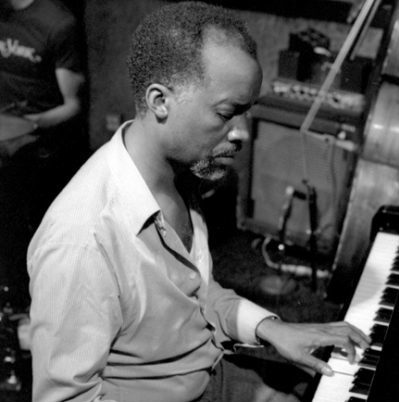
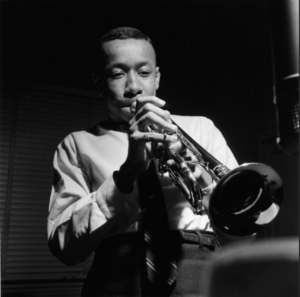
“While Mosaic never does wrong, this set is absolutely perfect. Three CDs of Andrew Hill, almost all of it previously unheard by the public. While these sessions probably sat in the vaults to lack of commercial viability at the time, they are every bit as good as Hill's contemporary Blue Note releases that have been released. Some of the lineups are chock full of heavy hitter sidemen- Sam Rivers, Lee Morgan, Woody Shaw, etc. Overall the set is a good indicator of the diversity of Hill's compositonal ideas in the late 60s. He is heard in large group settings, trio settings, and most amazingly working with a string quartet. I find the string quartet sessions to be the most remarkable on the set.” - Customer Review
"A remarkable burst of creativity over a two week span. Of course the Chet Baker reunion is marvelous. The Vinnie Burke strings are a great complement to Mulligan. I have to admit I was a bit worried about it. To be honest, while I love Gerry, I really bought this set for the Annie Ross session. Just fantastic! Her version of "I Feel Pretty" was worth the price for me. Transcendent.” - Customer Review
“ I've been purchasing Mosaic sets since the 90s and this is among my top five. Tyner's vision comes into focus on these sessions--powerful piano, extended modal songs, Eastern influences, and beautiful melodies. Remastering is top-notch as are the sidemen throughout.” - Customer Review
Mosaic Singles
Neglected Gems
Running Low
“This is such a great session. It is still so surprising that this lineup of the Messengers is overlooked and underrated. This lineup deserves to be heralded as one of Blakey's best alongside the Golson/Morgan/Timmons/Merritt '58 and the Shorter/Hubbard/Fuller/Walton/Merritt or Workman '61-'64 lineups. And, of course, this set has all of Mosaic's usual exemplary production hallmarks.” - Customer Review
“ The mastering on this disc is fantastic. Excellent sonic clarity all around. That, combined with Lloyd's great sense of melody and forward-thinking songwriting make for a satifsying listening experience. Lloyd's cool and progressive style is a joy, and the interplay between all the band members is superb. Tony Williams was one of the funkiest jazz drummers around, too! Buy this and you will find yourself seeking out more Charles Lloyd. Not to be missed! ” - Customer Review
Complete Atlantic Studio Rec.- The Modern Jazz Quartet 1956-
Mosaic Records Limited Edition Box Set
|
“The new drummer (Connie Kay) was relatively unknown and his predecessor was one of the most influential of modern drummers. Delightful as the group had sounded before, it sounded even better now because at last it had achieved that unity of feeling and purpose which Lewis had spoke of and which breathes the life blood of true art into the performance, making it a living thing existing on its own, over and above the individual parts.” - Ralph Gleason, San Francisco Chronicle
Limited Edition: 5,000 copies
7 CDs - $119.00 |
That sound. One group conceived it. Defined it. Perfected it. The Modern Jazz Quartet was certainly one of the most distinctive voices in the history of jazz, thanks to the unique qualities of personal expression and collective vision of its members Milt Jackson, John Lewis, Percy Heath and Connie Kay (who had replaced original drummer Kenny Clarke by the time the band started recording this music).
They were also exceptionally prolific during their tenure at Atlantic Records, producing 14 albums in eight years. And now, that MJQ sound gets the complete respect it deserves, thanks to our new box, The Complete 1956-1964 Modern Jazz Quartet Atlantic Studio Recordings.
For each of the 14 albums included on this set, our audio expert Ron McMaster worked from original tapes in order to draw out the best sonic properties possible, and achieved his goal of revealing subtle nuances that matched MJQ's own attention to detail. Finally, recorded sound worthy of the music it’s reproducing.
Controversial In Their Era
By forging an ensemble sound all their own – one that featured countermelodies and rhythmic byplay between the co-leaders Jackson and Lewis, rather than the more traditional soloist-with-accompanying-chords – the band members managed to ignite a controversy regarding their intent and whether it was jazz at all. Some argued that their cool, structured approach removed all the jazz from The Modern Jazz Quartet. The notion seems silly now, as anyone listening to these recordings today will discover. These men simply had the audacity and curiosity to interpret music the way they wanted to explore it, rather than subscribe to a style that was in vogue at the time.
The band’s style originated when Jackson, Lewis, bass player Ray Brown and drummer Kenny Clarke comprised the rhythm section for Dizzy Gillespie’s 1946 big band. They would remain on stage during set breaks designed to give the horn players’ lips a rest, and even recorded as The Milt Jackson Quartet. With personnel shifts, they evolved into an organization as comfortable with the influences of European chamber music as they were with jams in dusky after-hours clubs.
As for the musicians individually, they were four exceptional, highly experienced jazz masters. In addition to his tenure with Gillespie, Jackson had also performed with Howard McGee, Thelonius Monk, Charlie Parker, and more. He is without question one of the most accomplished instrumentalists ever to hold a set of mallets, whose solos were complex rhythmically, employed dramatic shifts in dynamic attack, and coaxed a lovely tone from an instrument that for others becomes harsh and mechanical. He is also responsible for some of the most venerated compositions in the standard jazz catalog.
Lewis – who had also performed with Parker, as well as Lester Young, Miles Davis, Illinois Jacquet and Ella Fitzgerald – created an intoxicatingly gentle sound on piano, highly uncharacteristic of someone with a bebop pedigree. His light approach was a perfect support for the far flashier Jackson, as he picked out moments to accentuate with a counter melody or a complementary line. As the band’s principal writer, he also helped establish their sound.
Heath was another veteran of Miles, Parker, and Monk, and had played as well with Fats Navarro, J.J. Johnson, and Clifford Brown. Secure, firm, flowing – he was the guy you wanted on bass when you needed someone to build your ideas around.
And Kay was another bop professional who had worked his way through associations with Young, Stan Getz, Coleman Hawkins, Parker, and Davis. His style was relaxed and sparse – the voice of a seasoned and respectful listener. He rarely soloed, but thanks to his interest in a wide battery of percussion instruments, he had all the tools to support Lewis’ compositional aspirations.
The Complete Package
Analyzing all this music for us is Doug Ramsey, who has won a Lifetime Achievement Award from the Jazz Journalists Association and is the author of "Take Five: The Public and Private Lives of Paul Desmond." His essay in our exclusive Mosaic booklet ranges across the band’s music, history, inner workings, and how the personality of each member contributed to the success of the band’s concept.
Among the photographs we secured for our booklet are a number of previously unpublished photographs by Clemons Kalischer of the MJQ at Music Inn in Lenox, Mass. There has never been a package like this one, and it’s quite likely there never will be again.
Read More About Modern Jazz Quartet:
Track Listing, Personnel & Recording Dates »

- Booklet
- Audio Quality
- Photography
- Sample Session Notes
For each of the 14 albums included on this set, Ron McMaster has been able to return to the original master tapes and draw out the best sound with attention to sonic details that matches MJQ's trademark attention to msucial detail.
Photo Copyright © Protected
Modern Jazz Quartet
Among the photographs that grace the booklet of this set are a number of previously unpublished photographs by Clemons Kalischer of the MJQ at Music Inn in Lenox, Mass., recording, performing with Sonny Rollins and jamming with Jimmy Giuffre.
(G & H) Music Inn, Lenox, Massachusetts, August 3 & 31, 1958
Following a year of intensive touring, which had become their way of life (Lewis to Hall: “I’m never home anyway”), the MJQ was back at Music Inn to combine rest and recreation with another summer session of the School of Jazz. They recorded music that, much like that in The Modern Jazz Quartet album of a year earlier, consisted of pieces with which they had become comfortable by way of thorough road testing. The medley, with its ingenious transitions between segments, is primarily a vehicle for Jackson’s inquisitive exploration of three great standard songs. It includes Lewis’s compelling countermelodies. As Gerry Mulligan liked to point out, YARDBIRD SUITE is one of Charlie Parker’s most song-like compositions. Exposition of the familiar melody is shared in fragments around the quartet. There is a pointillist chorus with Heath standing by before the piece devolves into a notably economical Lewis solo. Then Heath and Kay get their licks in, Jackson kibitzes, and Lewis’s arrangement closes with a rapid-fire canon.
MIDSUMMER, slow, and FESTIVAL SKETCH, sprightly, were new Lewis compositions, lightly harmonized to leave generous room for reflective invention by John and Bags. Connie’s and Percy’s rhythmic unity is amazing here.
For the first time since they had recorded together for a memorable Prestige album in 1953, Sonny Rollins joined the Modern Jazz Quartet in concert at Music Inn. When I quoted Gunther Schuller’s observation that “Sonny was in one of his more whimsical and sardonic moods that night,” Rollins laughed at length. “Well, that’s great,” he told me,” still chuckling. “I haven’t heard that record in years and years and years. I usually shrink when I hear my own recordings, but I remember that the last time I heard it I didn’t shrink so much.
“When Milt first came to New York, we played at Minton’s Playhouse. We hung out a lot. I knew Percy maybe even a little better than the others, we played together so much, and I was close friends with Connie Kay. I heard John with Charlie Parker and he accompanied Lester Young, so that’s when I became aware of his soloing. And he’s a great writer. It was great fun just to be playing with musicians of that caliber,” he said. “Considering the success that they’d been having around that period, it was a real boon for them to ask me to do something with them.”
In his notes for The Modern Jazz Quartet At Music Inn/Volume 2, Schuller says of Rollins, “On both tracks, we hear him fooling around with little motives, toying with them and his instrument—almost as a cat will with a mouse—spoofing and kidding, at times facetious and at others pleasantly jocose. Sonny’s unwavering insistence on being funny produces a very interesting by-play of reactions in the Quartet. Milt and Connie buckle down to some real great, swinging—Milt specially in his own BAGS’ GROOVE and Connie in TUNISIA. Percy occasionally joins the fun, as in BAGS’ GROOVE, where he plays, for instance, a typical ‘oom-pah’ bass line which could be, except for its funky swing, straight out of some hotel band.”
Schuller’s unerring ear picks up nuances in the accompaniment that help in understanding something of the mentality of improvising jazz musicians and their ability to adjust. “John’s reactions are more complex,” he writes. “In BAGS’ GROOVE, when Rollins enters with humorously disjointed parodies of Milt’s theme, John prods him soberly with beautiful understated chords. After three choruses he realizes that Rollins will not be swayed, and ‘joins in’ with little discordant semi-tone ‘bleeps,’ which he later develops into a relentlessly building, insinuating rhythmic figure, which Sonny finally can no longer resist. He almost becomes serious for a few choruses, only to return eventually to the prevailing punning mood.”
At the end of our conversation in 2011, Sonny wanted to make a point about the MJQ and about nostalgia. “They’re a great group,” he said, “and I miss them very much. But I’m not a person to wallow in what used to be. The old days were great. Today is great also.”
“Tomorrow is better,” I said.
“Tomorrow is better,” Sonny said with a smile. “Tomorrow is better.”
CUSTOMER REVIEWS
Click here to write a review| MJQ | |
| The sound of this set is bright and lively, almost like listening in a small club. The nuances of the music are brought forward - the MJQ never sounded better! | |
| Nettoyant douche: | |
| You read what I wrote again & the disclaimer at the end of the track-listing and set info. I simply and respectfully question *the decision* and its rationale - given their usual modus operandi. I would have really liked to have some of the live stuff included in the set. I "apologize" for thinking for myself. I'm as big a fan as anyone, but I wanted to mention that slight disappointment. Thanks for playing; come again. | |
| Read it again | |
| The title of the box set includes the following qualification, the complete "Studio Recordings." | |
| Ok Great Set But Let's Be Honest | |
| Is this really complete without the live stuff? No, I don't think so and who are Mosaic to declare those recordings offered nothing "innovative" when they're loath to leave anything off of other sets? And it's disingenuous for them to say they didn't include them for reasons of size and "repetition of repertoire". Mosaic's stuff is all about alternate takes and when they do overload sets with that so called repetition they pat themselves on the back for it. So saying it's a minus here is not copacetic. I fear it's all about economics & marketing (and maybe rights?). Now that that's off my chest: Mosaic, thank you. This is one beautiful wad of delightful music that puts many albums together in a very nice box set. | |
| Connie Kay | |
| I agree Connie Kay was the a keynote to the MJQ . Listen and listen again to a true master playing drums. | |
| Discs | |
| Disc after disc of great jazz - it's a bit overwhelming how good these guys were. | |
| The Percy Heath Quartet-- | |
| OK, the "Mr. Kay" review beat me to it, kinda, but as a bassist I've always been in love with Percy Heath's playing- intonation, taste, ideas... it's probably the closest to bass playing perfection that I can imagine. But in truth, the MJQ was an ensemble in the true sense of the word- not one member was replaceable, or less important than than another. John Lewis composed with the whole band in mind, and it's on his pieces that they sound least like the Milt Jackson Qt or the John Lewis Trio. Lewis is a greatly under appreciated pianist. Total clarity of thought, incredibly melodic- it's some of the most purely musical piano playing you will ever hear. It's great to have this music presented in some kind of coherent form, and here's another 'A' grade for the sound quality. | |
| Mr. Kay | |
| One thing that comes across so clearly in this set is what a subtle and superb drummer/percussionist Connie Kay was. This set is certainly one of Mosaic's masterpieces. | |
| The best of the best | |
| I sat and listened to this entire collection in one long day. It was so good that I couldn't step away. The sonics are just amazing. MJQ has never sounded this good on record before. The nuances of their interchanges shine through and their understated style is hard to resist as they swing like crazy. The conversations that they had with each other and the support they had for each other are almost unique. In the many years I have been buying and listening to Mosaic releases starting with the Complete Commodore, Vol. I-III, this MJQ set is the best yet. | |
| Ensemble | |
| I used to question why the MJQ with its ensemble conception was always recorded like it was Milt Jackson and his back-up band. The vibes were always clear with a rich, full sound while the piano always sounded one dimensional with a muted sound. Well, the big winner in this set is John Lewis whose piano is now crisp, bright and the interaction between Lewis and Milt is even more of a wonder. You can hear so much more in this set. The drums/cymbals sound like they're in the room - the mix does justice to the ensemble with a balanced clarity that never was achieved in all their previous recordings. This is one of the most impressive remastering jobs of any jazz recording I've ever heard. | |
| What a feast!! | |
| I got this wonderful set for an early Father's Day present. I have been a moderate fan of MJQ for years, but this set, with its incredible sound, has put the MJQ up with my favourites. | |
| MJQ All Weekend Long | |
| Have been playing this obsessively since I got the box last Thursday. A wonderful set, and excellent quality as usual from Mosaic. | |
| modern in today and beyond | |
| Beautiful music and ahead of its time . so much that you could listen to it at any time and be modern the sound has been remastered to make it sound as if you were right there by the musician . they dressed well and were the pros to be measured. this set will be a winner. | |
Complete Atlantic Studio Rec.- The Modern Jazz Quartet 1956-
Limited Edition:
5,000 copies
7 CDs - $119.00

Customer Reviews:
"Well, the big winner in this set is John Lewis whose piano is now crisp, bright and the interaction between Lewis and Milt is even more of a wonder...This is one of the most impressive remastering jobs of any jazz recording I've ever heard."
Read More Reviews »
More Info
Audio Clips
Play: Bags' Groove
Play: Bess You Is My Woman Now
Play: Bluesology
Play: Da Capo
Play: One Note Samba
Play: Sketch
Play: The Sheriff
Play: Woody N' You
Sign Up!
Special Sales
Last Chance Offerings
Noteworthy Jazz News